The hotel lobby used to be a pass-through space. Guests walked in, checked in, grabbed a key, and headed upstairs. That old way of thinking is no longer enough, especially in a competitive hospitality market like Dallas. Today, a hotel lobby is the first handshake, the first impression, the first photo opportunity, and often the first reason a guest decides whether a property feels worth the price.
Dallas hotels are not just competing with the hotel across the street anymore. They are competing with boutique stays, luxury brands, short-term rentals, convention hotels, lifestyle properties, and every visually impressive lobby a traveler has already seen online. In a city known for business travel, sports events, conventions, restaurants, shopping, and upscale development, boring hotel lobbies can quietly cost properties more than they realize.
That is why Commercial Interior Design Dallas has become more than a design service. For hotels, it is a business strategy. A well-designed lobby can influence guest confidence, online reviews, social media sharing, booking decisions, event inquiries, and the overall reputation of the hotel.
🏨 A Dallas hotel lobby should not feel like empty square footage. It should feel like a reason to stay.
The Lobby Is No Longer Just a Check-In Area
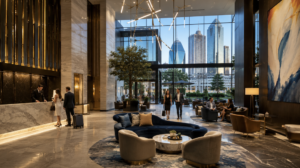
A modern hotel lobby has to do more than hold a front desk and a few chairs. It now functions as a welcome center, lounge, casual workspace, meeting spot, brand statement, and social media backdrop. Guests may arrive early and need a comfortable place to wait. Business travelers may need a quiet corner to open a laptop. Couples may want a stylish spot to meet before dinner. Event guests may judge the rest of the property before they even see the ballroom.
Dallas is a city with strong hospitality demand and an active travel economy. Visitors come for conferences, weddings, sporting events, corporate meetings, concerts, medical appointments, and weekend getaways. According to Visit Dallas, the city continues to promote itself as a major destination for attractions, restaurants, neighborhoods, and events. That means hotels have to think beyond beds and bathrooms. They need spaces that support the entire visitor experience.
A boring lobby can make a hotel feel dated, even when the rooms are clean and the staff is excellent. Guests often make emotional judgments quickly. If the lighting feels harsh, the furniture looks generic, the layout feels awkward, or the space lacks personality, it can create an impression that the hotel is behind the times. On the other hand, a thoughtful lobby can make a property feel polished, memorable, and worth recommending.
Dallas Hotel Competition Is Getting Stronger
Dallas is not standing still. The hotel market continues to draw attention from developers, investors, and hospitality brands. Reports from Lodging Econometrics have highlighted Dallas as one of the leading U.S. markets for hotel openings and development pipeline activity. More rooms, more brands, and more properties mean guests will have more choices.
When supply increases, design matters even more. A hotel cannot rely only on location or room rates if nearby competitors offer a better visual experience, better lobby flow, better amenities, and more inviting public spaces. Guests may compare hotels before booking by looking at photos, reviews, lobby images, restaurant spaces, and event areas. If a hotel’s lobby looks bland online, it may never even make the shortlist.
This is especially important for independent hotels, boutique hotels, older properties, and mid-market hotels that want to compete with newer brands. A renovation does not always have to mean tearing everything apart. Strategic design improvements can modernize the guest experience through better lighting, updated seating, improved traffic flow, stronger brand colors, better materials, local art, hospitality-focused furniture, and more functional zones.
In a crowded market, a beautiful lobby gives guests something to remember. A boring one gives them nothing to talk about.
Design Shapes Trust Before the Guest Says a Word
Hotel guests may not consciously analyze interior design, but they feel it. They notice whether a space feels clean, cared for, safe, current, and professional. A lobby that feels neglected can create doubt. Guests may wonder if the rooms are outdated, if maintenance is behind, or if the hotel experience will match the price.
Trust is especially important in Dallas because the city serves many types of travelers. Corporate guests expect efficiency and polish. Wedding parties expect beauty and comfort. Convention attendees expect convenience. Luxury travelers expect atmosphere. Families expect safety and ease. A hotel lobby has to quietly communicate that the property knows what it is doing.
The City of Dallas Economic Development Department notes that the Dallas Tourism Public Improvement District includes hotel properties with at least 100 rooms and supports efforts tied to hotel room demand and tourism promotion. That kind of tourism structure shows how important hotels are to the broader Dallas economy. When hotels are part of a larger destination experience, the quality of their public spaces matters.
A professional lobby design can help communicate confidence through every detail. The front desk should be easy to find. Seating should feel intentional. Pathways should be clear. Lighting should be warm but practical. Materials should feel durable and elevated. The space should not feel random. It should feel planned.
Guests may not say, “This lobby has strong commercial design strategy.” They are more likely to say, “This place feels nice.” That simple reaction can influence the whole stay.
Social Media Has Turned Hotel Lobbies Into Marketing Assets
A hotel lobby is no longer seen only by the guests who walk through it. It can be photographed, posted, tagged, reviewed, and shared by hundreds or thousands of people. A stylish lobby can become free marketing. A boring lobby disappears.
Travelers often share photos of hotel entrances, lounge areas, restaurants, bars, art walls, fireplaces, seating areas, staircases, and statement lighting. Those images help future guests decide whether the property feels exciting or forgettable. In Dallas, where restaurants, nightlife, art, shopping, and business events all contribute to the city’s image, hotels benefit when their interiors feel connected to the energy of the city.
A good lobby gives guests a reason to take out their phones. It might be a dramatic light fixture, a comfortable seating area, a local mural, a refined reception wall, a beautiful bar, or a cozy lounge corner. These design choices are not just decorative. They create shareable moments.
The strongest hotels understand that every guest with a phone can become a small marketing channel. If the lobby looks impressive, guests may post it. If it looks ordinary, they probably will not.
Dallas Hotels Need Local Character, Not Generic Design
One of the biggest mistakes hotels make is designing spaces that could be anywhere. Dallas guests do not want a lobby that feels copied from a national template with no connection to the city. They want a sense of place.
Dallas has a distinct identity. It is business-focused, stylish, bold, diverse, and constantly evolving. The city has deep connections to commerce, arts, sports, dining, architecture, and cultural history. Even a simple overview of Dallas on Wikipedia shows the city’s scale and influence as one of the major urban centers in Texas and the United States.
Hotel design should reflect that local energy without becoming cheesy or overdone. That may mean using materials, artwork, colors, textures, and layouts that feel warm, upscale, and regionally aware. It could include local artists, Dallas-inspired photography, subtle architectural references, or design elements that nod to the city’s modern business culture.
Guests can tell when a hotel feels authentic. They can also tell when a space feels like a generic furniture package ordered without imagination. Local character helps a hotel become part of the destination instead of just a place to sleep.
A Better Lobby Can Increase Revenue Opportunities
A lobby is not just a cost center. When designed correctly, it can help generate revenue.
A beautiful lobby can support a lobby bar, coffee area, coworking lounge, small meeting space, retail display, or event pre-function area. It can encourage guests to spend more time on the property instead of leaving immediately after check-in. If guests feel comfortable gathering downstairs, they may buy drinks, order food, hold informal meetings, or invite others to meet them at the hotel.
Hotels with strong public spaces may also attract more event interest. Wedding planners, corporate meeting organizers, and group travel coordinators often care deeply about first impressions. If the lobby feels elegant and organized, it can make the rest of the property feel more appealing.
Industry coverage from Hotel Management has pointed to Dallas as a major hotel construction market, which means hotels need to look at design as part of long-term positioning. Properties that invest in public areas may be better prepared to compete against newer hotels entering the market.
A lobby redesign can improve how guests move, where they gather, how they interact with staff, and how they perceive the value of the hotel. That can support stronger reviews, better guest satisfaction, and a more competitive property image.
Interior Design Helps Solve Real Operational Problems
Good hotel design is not only about making a space look beautiful. It also helps solve operational problems.
A poorly planned lobby may create check-in bottlenecks, awkward seating arrangements, confusing entrances, noise issues, poor lighting, and wasted square footage. Guests may not know where to stand, where to sit, or where to go next. Staff may struggle with inefficient layouts. Groups may crowd areas that were never designed to handle them.
Professional commercial interior design looks at how people actually use the space. Where do guests enter? Where do they pause? Where does luggage go? Where do lines form? Where do business travelers want to sit? Where do families wait? Where should lighting be brighter? Where should the space feel more relaxed?
Hotels often have valuable square footage that is underused because the layout is not inviting. A design team can help turn dead zones into useful seating, private corners, brand moments, or revenue-producing areas. In a city where hotel real estate is valuable, wasted lobby space is a missed opportunity.
Luxury and Boutique Expectations Are Changing the Standard
Not every Dallas hotel needs to be a five-star luxury property, but every hotel is being judged against higher visual standards. Boutique hotels, lifestyle brands, and luxury renovations have changed what guests expect.
Coverage from Hospitality Design has reported on luxury hotel development tied to Dallas projects, showing how high-end hospitality brands continue to shape expectations in the market. When visually strong hotels enter a city, they raise the bar for everyone.
A mid-market hotel does not need marble everywhere or extravagant chandeliers to compete. It does need a lobby that feels intentional, clean, updated, comfortable, and aligned with its guests. Even simple improvements can make a major difference. Better lighting can make the space feel warmer. Updated furniture can make it feel more current. Improved signage can reduce confusion. New textures can make it feel more expensive. A smarter layout can make it feel more welcoming.
The goal is not to copy luxury hotels. The goal is to make the best possible impression for the property’s brand, budget, and audience.
Reviews Often Begin With First Impressions
Online reviews are powerful in hospitality. Guests may mention rooms, staff, breakfast, cleanliness, parking, location, and noise, but the emotional tone of a review often starts at arrival. If the first impression is strong, guests may be more forgiving of small inconveniences. If the first impression is weak, they may notice every flaw.
A boring or outdated lobby can make guests feel like they overpaid. A beautiful, comfortable lobby can make the same rate feel more reasonable. That perception matters.
For Dallas hotels that serve business travelers, convention attendees, wedding guests, families, and tourists, the lobby is often the beginning of the guest story. It sets expectations. It tells guests whether the property is modern, professional, thoughtful, and worth returning to.
This is why lobby design should not be treated as a surface-level upgrade. It is part of reputation management. It influences photos, reviews, guest confidence, and brand memory.
Conclusion: Dallas Hotels Need Lobbies That Work Harder
Dallas hotels can no longer afford boring lobbies because guests no longer see lobbies as background space. They see them as part of the experience. They judge them in person. They compare them online. They photograph them. They review them. They remember them.
In a competitive Dallas hospitality market, a hotel lobby should welcome guests, support operations, reflect the city, strengthen the brand, and create moments worth sharing. It should make travelers feel confident from the second they walk through the door.
Commercial interior design gives Dallas hotels the ability to turn underwhelming spaces into strategic assets. It helps properties look more professional, feel more valuable, and compete in a market where first impressions can directly affect bookings, reviews, and revenue.
A boring lobby says, “This is where you check in.”
A powerful lobby says, “You made the right choice.”