California’s Peninsula is known for beautiful coastal scenery, energetic business districts, upscale communities, and convenient access to both San Francisco and Silicon Valley. Hotels throughout the region welcome corporate travelers, vacationing families, wedding guests, international visitors, and residents planning relaxing weekend stays. In such a competitive hospitality market, a comfortable room and a convenient location are no longer enough to make a property memorable.
Guests increasingly judge a hotel by the complete experience it offers. They notice the lobby, landscaping, restaurants, fitness areas, gathering spaces, and outdoor amenities. A hotel swimming pool can become one of the property’s most photographed and frequently discussed features. When designed properly, it creates a destination within the hotel rather than serving as a simple place to swim.
This has encouraged more property owners and hospitality managers to search for experienced pool contractors who understand both visual appeal and commercial performance. A hotel pool must complement the architecture, accommodate different types of guests, support daily operations, and continue looking inviting through years of frequent use.
The timing is especially important. The California Hotel & Lodging Association’s news center regularly highlights hotel investments, industry developments, ownership changes, operating challenges, and opportunities affecting properties throughout the state. For hotels on the Peninsula, upgrading an outdated pool area can be a practical way to strengthen the guest experience while protecting the property’s competitive position.
California’s Hotel Market Rewards Memorable Experiences 🏨
Travelers have more ways than ever to compare hotels before making a reservation. Photos, online reviews, virtual tours, social media posts, and travel websites allow potential guests to examine nearly every visible detail of a property. A worn pool deck, dated furniture, faded tile, or uninspired outdoor area can influence a booking decision long before the traveler reaches the reservation page.
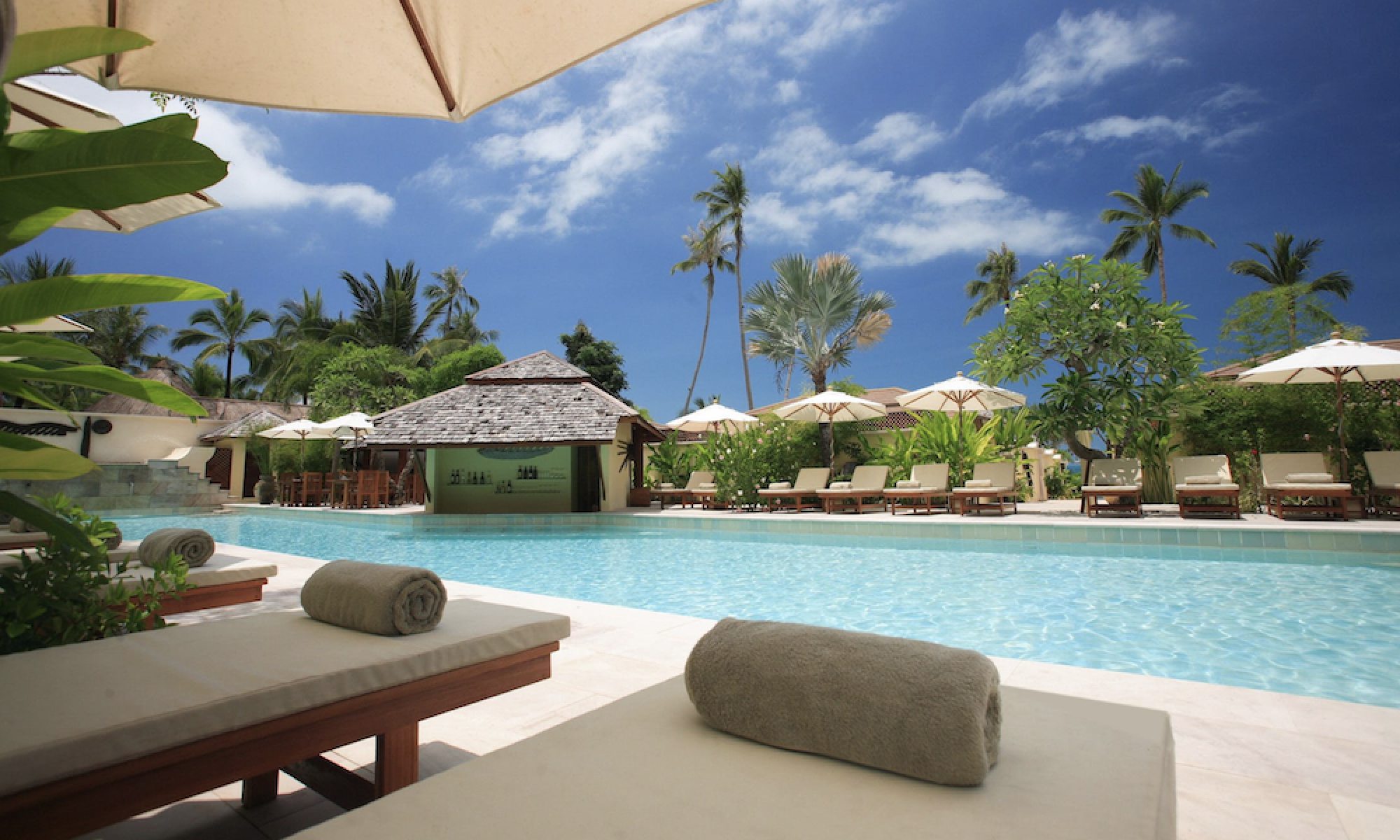
A thoughtfully planned pool area produces the opposite effect. Clear blue water, attractive lighting, comfortable seating, shaded gathering areas, carefully selected materials, and surrounding landscaping can make a hotel appear more polished and valuable. The pool becomes part of the hotel’s identity and gives guests another reason to select the property over a nearby competitor.
The latest information available through Visit California’s research dashboard helps hospitality professionals follow travel indicators, visitor sentiment, economic conditions, and statewide tourism performance. This type of industry intelligence reinforces the importance of understanding what travelers value and how their expectations are changing.
Hotels do not need enormous resort-style pools to create an impressive experience. Strong design can make a modest space feel exclusive, comfortable, and visually distinctive. Proportion, material selection, lighting, furniture placement, privacy, and landscaping often matter more than sheer size.
A Pool Can Become a Powerful Hotel Marketing Asset 📸
The modern hotel pool works as both an amenity and a marketing tool. Guests frequently photograph attractive outdoor spaces and share them through Instagram, Facebook, travel blogs, review platforms, and private messages. Each image can introduce the property to potential visitors without requiring another paid advertisement.
This organic exposure becomes especially valuable for boutique hotels, independent properties, and regional hotel groups competing against national brands. A distinctive pool setting gives the property recognizable visual content for its website, social channels, email campaigns, wedding promotions, and seasonal travel packages.
The San Francisco Peninsula includes communities stretching through an economically and culturally significant section of the Bay Area. Hotels in this region serve a broad mixture of technology professionals, tourists, families, conference attendees, wedding parties, and long-term business travelers. A flexible pool environment can appeal to several of these audiences at the same time.
A business traveler may use the pool deck as a peaceful place to unwind after meetings. Families may view the pool as a major part of their vacation. Wedding guests may gather there before or after scheduled events. Couples may choose the property for a brief staycation because the pool area feels private and relaxing. One well-designed amenity can support numerous guest experiences.
Hotels Need More Than Basic Pool Installation
Commercial hospitality projects require a different level of planning from ordinary residential pool construction. Hotels operate around established schedules, guest expectations, employee responsibilities, insurance requirements, and long-term financial goals. Construction decisions must account for how the property will continue functioning while work is underway.
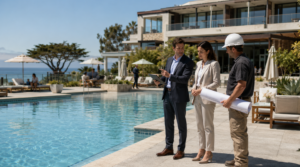
Hotel owners searching for Pool Contractors Near Me Peninsula Area are often looking for more than a company that can excavate a site and fill it with water. They need professionals capable of considering the entire outdoor environment, including access routes, seating, lighting, drainage, surrounding plant material, privacy, visibility, maintenance access, and compatibility with the hotel’s existing architecture.
Material selection is especially important. Hotel pools may experience heavy use, rolling housekeeping equipment, frequent furniture movement, moisture exposure, cleaning chemicals, spilled drinks, and constant foot traffic. Surfaces must contribute to the desired appearance while remaining appropriate for a demanding commercial setting.
The final design must also make sense operationally. Equipment should be accessible to maintenance personnel. Storage needs should be considered early. Guest pathways should remain logical. Furniture arrangements should preserve movement around the pool. Lighting should improve nighttime visibility while contributing to the atmosphere.
Safety and Compliance Remain Central to the Project 🛟
A beautiful hotel pool must also support responsible operation. California maintains requirements covering public swimming pools, sanitation, safety, construction, and related areas. The California Department of Public Health’s swimming pool requirements provide access to state laws and regulations that apply to public pool environments.
Hotel owners should work with qualified professionals who understand the distinction between private backyard construction and pools intended for public or commercial use. Planning may involve local building departments, county environmental health agencies, accessibility considerations, equipment standards, barriers, signage, drainage, sanitation, and inspection procedures.
Addressing these matters during the design stage can reduce disruptions later. Correcting an oversight after construction has begun can be more expensive and may delay reopening. A coordinated process helps hotel management understand the project timeline, required approvals, operational limitations, and responsibilities connected to the finished pool.
Safety planning also extends beyond minimum regulatory requirements. Clear sightlines, sensible depth transitions, suitable walking surfaces, dependable lighting, well-positioned handrails, and organized furniture placement all contribute to a more comfortable guest environment.
Energy Efficiency Has Become an Operating Priority
Hotel owners must balance guest satisfaction with ongoing operating expenses. Pumps, heaters, lighting, filtration systems, and water features can affect the long-term cost of maintaining a pool. Efficient equipment and sensible operating controls may help reduce unnecessary energy use while preserving the experience guests expect.
The California Energy Commission’s guidance on dedicated-purpose pool pumps explains standards and efficiency requirements affecting pool pump equipment. This information matters because equipment choices made during construction or renovation can influence future energy consumption, replacement needs, and maintenance planning.
Efficiency does not require sacrificing appearance. Modern systems can support attractive lighting, comfortable water temperatures, clean circulation, and decorative water elements while giving hotel operators greater control over schedules and performance.
Thoughtful landscape design can also support efficient operations. Appropriate plant selection, carefully planned irrigation, durable hardscaping, and effective drainage can reduce maintenance demands around the pool. Shade structures and strategic planting may improve guest comfort without relying solely on mechanical solutions.
The Pool Area Can Support Additional Hotel Revenue 💼
An upgraded pool can contribute value beyond standard overnight reservations. Hotels may use an attractive pool environment to support private gatherings, corporate retreats, small receptions, wellness events, seasonal promotions, photography sessions, and premium guest packages.
The precise opportunities depend on the property, local regulations, available space, staffing, and the hotel’s target audience. The broader principle remains valuable. A neglected pool consumes maintenance resources, while a well-planned pool can support marketing, guest satisfaction, event programming, and stronger positioning.
Recent reporting on San Francisco’s hospitality economy illustrates the broader role hotels play in supporting restaurants, retailers, attractions, employment, and local tax activity. An American Hotel & Lodging Association report on San Francisco tourism found that hotels generated more than $12 billion in economic impact in the city during 2025.
Although individual results vary by property, this broader economic activity demonstrates why hotels continue investing in features that attract visitors and encourage spending. The pool area can become one piece of a larger strategy designed to make the property more appealing, more useful, and more closely connected to the surrounding destination.
Outdoor Design Should Match the Hotel’s Identity
A pool renovation should never feel disconnected from the rest of the property. A contemporary business hotel may benefit from clean lines, restrained materials, integrated lighting, and flexible seating. A coastal boutique hotel may use softer textures, natural materials, layered planting, and intimate gathering spaces. A family-oriented property may place greater emphasis on durability, visibility, shade, and convenient movement.
Consistency creates a stronger impression. Guests should feel that the pool, landscaping, architecture, furnishings, signage, and interior spaces belong to the same hotel. When the outdoor area looks like an afterthought, the entire property can feel less cohesive.
Experienced design and construction professionals can help hotel owners evaluate how different elements work together. The process may reveal opportunities to improve more than the pool itself. An outdated deck could become an outdoor lounge. An unused corner could support a shaded seating area. Poor nighttime visibility could be transformed with layered lighting. Sparse landscaping could become an attractive visual buffer.
Sustainable Improvements Strengthen Long-Term Value 🌿
California’s hospitality industry continues to consider how tourism growth, environmental responsibility, community relationships, and visitor experiences fit together. Visit California’s destination stewardship guidance emphasizes the importance of protecting the qualities that make destinations appealing while supporting the long-term strength of the tourism economy.
For hotel pool projects, responsible planning may include durable materials, efficient equipment, water-conscious landscaping, sensible irrigation, reduced replacement frequency, and designs that remain attractive without excessive maintenance. These decisions can support both operational goals and the expectations of travelers who pay attention to environmental practices.
Durability itself is an important form of sustainability. A timeless design built from appropriate materials may serve the property longer than a trend-driven renovation that quickly appears dated. Hotel owners benefit when improvements continue delivering value across multiple travel seasons.
Conclusion
California Peninsula hotels operate in one of the country’s most visible and competitive travel markets. Guests arrive with high expectations, easy access to online comparisons, and a strong appreciation for spaces that feel comfortable, attractive, and memorable.
A professionally planned hotel pool can influence booking appeal, guest reviews, social media exposure, event opportunities, property identity, and long-term value. It can turn an underused outdoor area into a defining feature that supports both leisure and business travelers.
The strongest projects begin with a clear understanding of the hotel’s audience, architecture, operational needs, safety obligations, maintenance requirements, and future goals. When those elements guide the design, the finished pool becomes more than another amenity. It becomes part of the reason guests remember the property, recommend it to others, and choose to return.