
When Water Strikes: How Water Damage Can Cripple a Hotel 🌊

Hotel News for Water damage

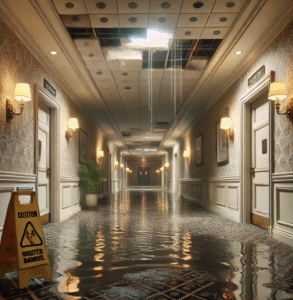
Water is life. But for hotels, water is often the hidden adversary — creeping in from roofs, plumbing failures, storms, or structural cracks. Over time, unchecked water intrusion can severely damage a hotel’s structure, finances, reputation, and operations. In this article, we’ll explore how water damage can destroy a hotel from the inside out — not just in a dramatic flood, but via slow, insidious degradation. We’ll also reference real-world hotel news to illustrate how even large properties can be vulnerable.


The Many Faces of Water Damage

Hotels are complex structures with guest rooms, corridors, lobbies, meeting rooms, kitchens, HVAC systems, basements, swimming pools, and often subterranean parking. Water can enter or affect any of these zones in multiple ways:

  • Roof leaks and faulty flashing

  • Burst or aging plumbing pipes and joints

  • Backflow, sewage infiltration, or storm surges

  • Air conditioning condensate or HVAC leaks

  • Groundwater seepage into foundations or basements

  • Accidental flooding — e.g. broken sprinklers, guest misuse, or onsite construction mishaps

Each pathway can initiate damage in a different area, and since hotels are high-traffic, high-occupancy environments, damage can spread quickly if not identified early.


Structural and Operational Impact

Water is destructive not only because of what it directly soaks, but also because of what it causes over time: deterioration, instability, safety hazards, and compounding failures.

Weakening the Building Envelope

Persistent moisture in walls, ceilings, and floors can degrade structural components. Wood framing can warp or rot; metal elements can corrode; concrete and masonry may suffer freeze-thaw cycles or spalling. Over time, load-bearing walls, slabs, and support columns may weaken, leading to costly remediation or even partial collapse.

Electrical, Fire Safety, and Life Safety Systems at Risk

Water intrusion in walls or ceilings often reaches electrical wiring, conduits, sockets, and junction boxes — risking short circuits, fire hazards, and system failures. Vital life safety systems such as fire alarms, sprinklers, emergency lighting and exit signage can also malfunction if water damages sensors or wiring. A hotel may then fail local code inspections or be shut down for safety violations.

Impact on Guest Experience and Reputation

Water damage often manifests in visible signs: peeling wallpaper, stained ceilings, mold and mildew, musty odors, damp carpets, bubbling paint, warped flooring, or visible drips. Guests encountering these problems will likely complain, leave negative reviews, or choose competitors in the future. A single viral social media post or review can tarnish a hotel’s reputation for years.

Health Risks and Mold Proliferation

Damp conditions are ideal for mold and microbial growth. Mold spores can reduce indoor air quality, trigger allergies or respiratory issues in guests and staff, and lead to expensive remediation. In extreme cases, parts of the building might need to be vacated during abatement.

Business Disruption and Revenue Loss

When water damage affects guest rooms, meeting spaces, food & beverage areas, or critical infrastructure (elevators, HVAC, electrical), those parts of the hotel may need to shut down temporarily. That means canceled reservations, reduced occupancy, revenue loss, and increased operational strain. In severe cases, the entire hotel may become uninhabitable, forcing relocation of guests and possible litigation.

Escalating Repair Costs and Insurance Challenges

Early-stage leaks might be mendable by localized repairs. But as damage spreads — affecting finishes, structural elements, MEP systems, and safety systems — the repair scope balloons. Insurance claims may be denied or limited if damage is deemed the result of neglect or long-term seepage rather than sudden accidental events. Also, insurers may increase premiums or refuse coverage after repeated claims.


Real Examples from Hotel News

Seeing how water damage plays out in real hotels underscores how serious the threat is.

  • In Springfield, Illinois, the Wyndham Springfield City Centre was rendered inoperable after extensive water damage. The elevators, fire alarms, sprinkler systems, hotel rooms, restaurants, meeting rooms, and common spaces all suffered damage. Officials barred public use of the building due to nonworking life safety systems. Illinois Times+1

  • The historic Mizpah Hotel in Tonopah was heavily damaged after a guest triggered a sprinkler system, flooding rooms, hallways, the lobby, and even the basement. Damaged carpets, bar areas, speakers, furniture and water infiltration into lower levels required major repair work. Pahrump Valley Times

  • In Tampa Bay, the Thunderbird Beach Resort was set for demolition and rebuilding after hurricanes caused over 80% damage. While this was storm damage rather than subtle seepage, it highlights how extreme water events can accelerate structural destruction in resort hotels. Axios

These examples illustrate that whether the trigger is a burst pipe, a malicious sprinkler activation, or a natural disaster, hotels are highly vulnerable to water damage.


Why Hotels Are Especially Vulnerable

Hotels face unique challenges that amplify water risk:

  1. High density and many units
    With dozens or hundreds of guest rooms, hallways, bathrooms, and service areas, there are many potential failure points. One slow leak in a guest room can go unnoticed and propagate into adjacent areas.

  2. Continuous occupancy and usage
    Hotels operate 24/7. Guests, housekeeping, laundry, food service — all run constantly. That means humidity, water usage, and wear on plumbing are nonstop, increasing the chance of failure.

  3. Complex system interdependencies
    HVAC, plumbing, fire suppression, electrical and structural systems intertwine. A leak in one system can cascade to others, making diagnosis and repair complicated.

  4. Deferred maintenance and budget pressures
    Many hotel owners may defer long-term structural or waterproofing maintenance, focusing instead on cosmetic upgrades. Over time, neglect accumulates, and small leaks become catastrophic.

  5. Regulatory and insurance exposure
    Hotels must comply with local building codes, health codes, fire safety regulations, and insurance obligations. Water damage that compromises those systems can lead to fines, closures, or denied insurance claims.

  6. Reputational sensitivity
    Hotels live on reviews, guest satisfaction, and image. Water damage—even hidden—can translate into negative guest perception, loss of trust, and long-term reputational harm.


Early Warning Signs and Preventive Strategies

Preventing destruction starts with vigilance. Here are key signs and strategies:

Warning signs to watch for

  • Persistent odors: musty or wet smells

  • Discolored spots or staining on ceilings, walls, or floors

  • Bubbling paint, peeling wallpaper, blistered drywall

  • Soft or sagging ceilings or floors

  • Elevated humidity or condensation on windows

  • Unusual spikes in water bills

  • Repeated plumbing leaks or repairs

  • Discolored grout, rusting metal parts, or mineral deposits

Proactive preventive measures

  • Robust inspection programs
    Regular inspections of rooftops, flashing, plumbing risers, drains, HVAC units, mechanical rooms, and basements. Use infrared thermal imaging to detect hidden moisture.

  • Routine maintenance and renewal
    Periodic replacement of aging pipes, sealing joints, replacing caulking and waterproof membranes, and refurbishing drainage systems.

  • Real-time leak detection
    Install leak detection sensors, moisture alarms, and shutoff valves in vulnerable zones (behind walls, under floor slabs, above ceilings).

  • Redundant drainage and overflow control
    Overflow pipes, secondary drains, and failovers ensure that if one path clogs or fails, water can escape harmlessly.

  • Moisture control in HVAC and condensate lines
    Ensure condensate lines are clear, maintain proper slope, and prevent backups into ceilings or walls.

  • Waterproofing critical areas
    Apply sealants, membranes, or waterproof coatings in bathrooms, basements, foundations, and mechanical shafts.

  • Staff training and reporting
    Train staff (housekeeping, maintenance, engineering) to spot leaks early and report anomalies. Encourage preventative culture.

  • Insurance and risk planning
    Work with insurance underwriters to ensure proper coverage and that inspections are documented. Factor water damage mitigation into risk assessments.


How to Respond When Water Damage Strikes

When water is already doing damage, the response must be swift, coordinated, and transparent.

  1. Isolate and stop the source
    Shut valves, cut off broken pipes, stop infiltration paths. The longer water flows, the worse the damage.

  2. Evacuate or restrict access to affected areas
    Guest safety is priority. Seal off wet zones and reroute foot traffic.

  3. Document Everything
    Photograph damage, log dates, times, volumes, impacted assets, and communication with insurers. This is essential for claims and future audit.

  4. Water extraction and drying
    Use industrial dehumidifiers, air movers, negative-pressure drying, and controlled drying techniques to prevent mold growth.

  5. Mold assessment and remediation
    Engage certified mold remediation professionals to inspect and remove biohazards. Ensure containment to prevent spread.

  6. Structural assessment and repair
    Engineers should assess structural and mechanical systems. Replace or reinforce compromised elements.

  7. Restore and rebuild with resilience in mind
    When repairing, employ more robust materials, increased waterproofing, and lessons learned to reduce future risk.

  8. Communicate with stakeholders
    Guests, staff, insurers, regulators, and media should be informed honestly and promptly to maintain trust.

  9. Review and refine policies
    Once resolved, perform a root-cause analysis, update maintenance procedures, and reinforce preventive strategies.


The High Stakes: What’s Lost

Water damage doesn’t simply cost dollars in repair. Some of the broader losses include:

  • Permanent degradation of brand reputation

  • Long-term loss of guest loyalty

  • Legal liabilities, class action suits, or regulatory penalties

  • Elevated insurance rates or inability to insure

  • Displacement of guests and business interruption

  • Demolition or rebuild costs that rival new construction

  • Asset devaluation or forced sale

A hotel’s entire business model is built on trust, consistency, and comfort. Water damage chips away at those foundations slowly until collapse becomes inevitable.


Conclusion


Water damage may seem benign, but when it penetrates a hotel’s systems, it becomes a silent destroyer. From structural damage to mold, to life safety failures and reputational harm, water damage can unravel a hotel from the inside out. As demonstrated in real hotel incidents, no property is invulnerable. The solution is proactive vigilance: robust inspection programs, modern detection systems, preventative maintenance, and a culture that treats every drip as a red flag.

If you own, manage, or advise hotels, treat water risk as among the most critical threats. With careful planning and early intervention, you can preserve both the physical integrity of a property and the trust of your guests. 💧

(If you’d like help developing a water risk audit plan for your hotel or region, I’d be happy to help further!)


The World’s Most Restful Resorts for a Christian Historical Fiction Author ✍️🌍

Hotel News for Christian historical fiction

Crafting Christian historical fiction takes a special kind of quiet—the kind of silence where a sentence can breathe, prayer can settle, and the past begins to speak. The right resort can become more than a getaway; it can be a living study, a sanctuary, and a creative workshop all at once. Below, you’ll find thoughtfully chosen destinations that pair peace with place, history with hospitality, and beauty with the kind of amenities that make long writing days both productive and soul-nourishing. You’ll also find quick cues to help you choose: proximity to sacred sites, access to libraries and archives, seasonality, and the practical comforts that sustain a sustained writing rhythm. 📖

Why a Resort (and Not Just a Cabin) Helps Story Take Root

A resort isn’t just about a plush bed and a sea view. It’s a support system for deep work. Daily liturgy or nearby chapels, unhurried staff, a reliable desk and ergonomic chair, hearty breakfasts, and a well-timed pot of afternoon tea—these little gifts protect your creative momentum. Add to that a setting steeped in story (a monastery-turned-hotel, a castle with centuries of legends, or a desert inn under a vault of stars), and you have an environment where research notes, prayer, and prose begin to harmonize.

Here are handpicked resorts around the world that give Christian historical fiction authors what they most need: stillness, beauty, and historic resonance.

Monasteries and Castles of Europe: Where the Stones Still Speak 🕯️

Monastero Santa Rosa (Amalfi Coast, Italy). Perched atop a cliff, this former 17th-century convent offers terraces that tumble toward the Tyrrhenian Sea. The sense of enclosure—garden walls, cloisters, quiet corners—echoes the monastic days when time was measured in prayers. Begin your mornings drafting while the sun lifts from the water; take afternoons to outline in the herb garden where the wind smells faintly of lemon and rosemary. Day trips to Amalfi Cathedral or nearby churches anchor your setting details in the textures of real basilicas, reliquaries, and vaults.

Ashford Castle (Cong, Ireland). If your story needs medieval cadence—stone corridors, tapestries, torchlight ambiance—this 800-year-old castle-turned-resort is a masterclass in atmospheric detail. The library, archery lawns, and lake walks invite long, uninterrupted thinking. It’s easy to imagine a monk-scribe ferrying manuscripts across Lough Corrib or to weave Celtic Christian motifs into your characters’ inner lives. On chill evenings, write beside the hearth; on soft days, carry your notebook into the mossy hush where the next scene may arrive unannounced.

Parador de Santiago de Compostela (Hostal dos Reis Católicos, Spain). One of the oldest continuously operating hotels in the world, this former pilgrim hospital anchors you at the finish line of the Camino. If your novel leans into pilgrimage, relics, or cathedral politics, there’s nowhere better to soak up the reality of worn stones, incense, and footsore faith. Spend your mornings drafting, then wander the cathedral’s chapels and the museum’s archives for details you can’t invent: the way bronze catches candlelight, the acoustics beneath a Gothic vault, the rhythm of bells across a square.

Mediterranean & Holy Land–Adjacent: Light, Salt Air, and Sacred Echoes ⛪️🌊

Aman Venice (Italy). Tucked into a 16th-century palazzo on the Grand Canal, this sanctuary gives you museum-grade frescoes and hush—ideal for shaping court intrigue, merchant-saint encounters, or missionary correspondence. The interplay of Byzantine and Renaissance heritage in Venice mirrors many church debates your characters may face. Mornings at the desk, afternoons drifting through Scuole and basilicas, evenings revising while gondolas whisper past: your writing days become a liturgy of focus and reward.

The Oberoi Udaivilas (Udaipur, India). If your novel spans early missions, trade routes, or intercultural dialogue, Udaipur’s palace-like resort situates your imagination in a place where lakes mirror domes and history hums behind white marble screens. The hotel’s courtyards and colonnades offer private nooks for drafting; the city’s palaces and temples unveil layered questions of power, devotion, and art—excellent grist for characters whose faith is both anchor and compass.

Mountains, Forests, and High Quiet: Where Long Sentences Can Stretch 🏔️

Fairmont Banff Springs (Alberta, Canada). A “castle in the Rockies,” this grand resort surrounds you with alpine silence and cathedral-like pines. Dialogue becomes crisper at altitude; plot tends to clarify after a ridgeline walk. In the evenings, the lobby’s timber and stone can nudge you toward a sturdier prose cadence—fewer frills, more substance—perfect for chapters heavy with trial, loss, and hope.

Glenapp Castle (Ayrshire, Scotland). For an author chasing Reformation-era voices or medieval Scottish spirituality, this ivy-clad castle provides seclusion and sensory texture: peat tang in the air, heather in bloom, ocean light veering silver. Plan a spiritual retreat day with read-aloud Psalms before drafting; then let the winded hills and the sound of distant gulls tune your paragraphs toward gravitas.

Islands and Edge-of-the-Map Stays: Spaciousness for Big Revisions 🌬️

Fogo Island Inn (Newfoundland, Canada). Modern minimalism meets ancient coastline, and the North Atlantic supplies a metronome of waves that can keep you at the page longer than you thought possible. The community’s centuries-old faith practices and fishing heritage whisper at the edges of your outline. When you need a break, walk the shore; when you return, your paragraphs carry the clean line of the horizon.

Post Ranch Inn (Big Sur, USA). If your book wrestles with wilderness theophanies, desert fathers, or the thin places where heaven brushes earth, Big Sur’s cliff-edge quiet delivers. With no televisions and an emphasis on stillness, you’ll find your scenes lengthen naturally, your transitions breathe, and your characters’ prayers sound like surf against rock—steady, insistent, cleansing.

Desert Solitude and Star-Warmed Nights: A School of Prayer 🌌

Qasr Al Sarab Desert Resort by Anantara (Liwa, UAE). For stories that need wilderness testing—prophets, exiles, long roads—write where dunes run like scripture in the wind. Dawn light makes extraordinary drafting hours; twilight is built for revision. The resort’s courtyards and shaded terraces give you privacy to build a plot spine born of scarcity, endurance, and grace.

The Chedi Muscat (Oman). A serene, low-slung property that merges Arabian lines with Japanese restraint, The Chedi gives your prose a contemplative geometry. Poolside mornings suit outline work; beach walks dislodge stubborn paragraphs; the evening call to prayer places your timeline in a living soundscape of devotion.

Tea, Temples, and Measured Days: Asia’s Quiet Craftsmanship 🍵

Gora Kadan (Hakone, Japan). A ryokan set within a former imperial villa, Gora Kadan teaches pace: baths before dawn, tea after writing sprints, seasonal kaiseki like a poem about time. If your novel needs monastic rhythm, this is a masterclass. Tatami rooms invite longhand drafting; hot springs reward your page count; Shinto and Buddhist sites nearby foster respectful, careful world-building around your Christian characters’ encounters and dialogue.

HOSHINOYA Kyoto (Japan). Boat to your room along the Oi River; write while maple leaves skim the water. The refined stillness helps you craft scenes where interior conflict is the loudest sound. When you need a setting detail, step into nearby temples and gardens to calibrate color, scent, and silence.

The New World’s Sacred Threads: Missions, Cathedrals, and Colonial Echoes 🕰️

Rosewood San Miguel de Allende (Mexico). In a highland town famed for baroque churches and artists’ studios, you’ll find a roof terrace tailor-made for dusk revisions. If your story engages conversions, letters, or the human costs of empire, San Miguel’s cobbled streets and feast-day processions will give you living reference points. Morning pages in the courtyard; research in the Parroquia and the Biblioteca; evening scenes shaped by the slow tolling of bells.

Belmond Sanctuary Lodge (Machu Picchu, Peru). A rare chance to write with cloud forest at your elbow and Inca stonework beneath your feet. The proximity to the ruins allows early access before crowds, which means solitude—a precious resource for mapping redemption arcs or spiritual awakenings. Take only what you need to the terrace: a small notebook, a pen, and a willingness to listen to the past.

How to Choose the Right Resort for Your Book (and Your Soul)

Let your setting guide your stay. If your novel revolves around pilgrimage, choose a resort at the end—or along the middle—of an actual route. If your protagonist is a monk, write inside a former monastery. If your theme is wilderness sanctification, pick mountains or desert. When place and premise agree, research becomes a walk outside your door.

Make a rule of rhythms. Draft in the morning (2–3 hours), walk and read at midday, revise at dusk, and pray at bookends. Resorts reward routine; design yours around their natural gifts (sunrise views, afternoon tea, twilight bells).

Interview the walls. Ask staff about the original purpose of the building. Notice stonework, wood grain, door heights, and window latches; your descriptions will gain weight. If there’s a library, read a local history or a saint’s life before bed and let it season your syntax.

Protect your peace. Book a room with a writing desk, request top-floor corners, and confirm strong coffee or tea service. Pack a small travel keyboard, noise-dampening earbuds, and an analog notebook for sunrise drafting. And yes—schedule at least one true Sabbath day with no word count, only worship and wonder. 🙂

Keep a Finger on Hotel Trends (for Timing, Rates, and Quiet Seasons)

When you’re planning a multi-week writing retreat, it helps to track industry news—new openings (fresh inspiration), shoulder seasons (fewer guests), and the shifting amenities that make long stays easier. For timely, credible updates, browse CoStar News: Hotels, Hospitality Net, and Hotel Management. CoStar+2Hospitality Net+2

A Sample Itinerary for a Two-Week Writing Retreat

Days 1–3: Arrival & Alignment. Light research walks, note sensory details, set up your writing station, and define a simple liturgy of work and prayer. Two short writing blocks per day.

Days 4–7: Deep Draft. One long morning session (1,500–2,500 words), one short afternoon session (500–800 words). Sunset walk, then read primary sources (letters, sermons, chronicles) to keep your diction anchored in the past.

Days 8–10: Field Notes. Take day trips to museums, churches, archives, or ruins. Capture textures: candle soot, bell acoustics, how wool cloaks move in wind. Nightly paragraph-level edits only.

Days 11–13: Structural Pass. Re-outline chapters; fix scene order; close plot holes. Use the resort’s quiet corners—garden benches, libraries, cloisters—to think in pages, not sentences.

Day 14: Sabbath & Surrender. No drafting. Pray, rest, and write a short blessing for your future self: what to do first when you open the document back home.

Final Encouragement: Let Place Do Some of the Writing

Every one of these resorts offers more than comfort; they offer context—living, breathing history that will seep into your lines if you let it. As a Christian historical fiction author, you’re always listening for resonance: scripture in conversation with centuries, grace in tension with power, ordinary people meeting an extraordinary God. Choose a setting that echoes your story’s questions, steward your hours like a monk keeps the Hours, and trust the quiet to do its work.

The world is wide, the faith is deep, and your next chapter might be waiting on a terrace under bell-soft skies. Go where the stones still speak—and write until they sing.

Why Dallas Hotels Should Embrace Healthy Home Architecture 🏨🌿

Hotel News for Healthy Home Architecture

Healthy Home Architecture isn’t just for suburban residences anymore—it’s quickly becoming a strategic edge for hotels competing for the modern guest. In a market like Dallas, where business travel, conventions, sports weekends, and luxury getaways all collide, designing and operating a property like a “healthy home” can lift guest satisfaction, length of stay, RevPAR, and brand reputation. From clean air and low-toxin materials to circadian-friendly lighting and acoustics that actually let travelers sleep, this approach aligns perfectly with today’s wellness-minded guest and the city’s year-round hospitality demand.

What “Healthy Home Architecture” Means for a Hotel (and Why Dallas)

In residential design, Healthy Home Architecture usually means healthier materials, better ventilation and filtration, moisture control, thoughtful lighting, and soundscaping—plus layouts that reduce stress and support daily rhythms. Translate those principles into hospitality, and you get guestrooms and public spaces that feel fresher, quieter, more restorative, and more intuitive to navigate. For a Dallas hotel, that can be a crucial differentiator. Guests often arrive from long flights, late football or basketball games, hot summer days, or packed conference agendas. If your rooms help them breathe easier, sleep deeper, and recover faster, they notice—and they come back.

The business case is growing clearer by the month. Hotel trade outlets have been spotlighting improved indoor air quality (IAQ), upgraded HVAC components, and antimicrobial coil coatings as a one-two punch for guest comfort and energy efficiency—good for reviews and your operating statement. Hotel Management Wellness demand is also pushing hotels to make health a core brand promise, not a side amenity; industry analysis continues to track the spending power of wellness-motivated travelers and the advantage for properties that meet those expectations with credible, built-in features rather than token add-ons. Skift

Five Guest-Experience Wins You Can Engineer Into Your Building

1) Cleaner, Quieter Air That Guests Can Feel

Great IAQ is the cornerstone of any healthy building, and hotels are no exception. Swapping aging PTACs and rooftop units for newer equipment (even “base models”) can yield better filtration, antimicrobial protection on coils to resist mold/mildew, and lower energy consumption—improvements guests feel as freshness and fewer odors. Hotel Management On top of that, visible, room-level purifiers and active air-quality monitoring (even if displayed in the lobby) can build guest confidence and reinforce that health is part of your brand DNA. LODGING Magazine For Dallas properties dealing with seasonal allergens and urban particulates, this is a competitive lever guests will literally breathe.

2) Non-toxic Finishes and Thoughtful Housekeeping

Low-VOC paints, adhesives, and sealants reduce irritants that can trigger headaches or disrupt sleep. Pair material choices with greener cleaning products to minimize residual chemical smells and improve perceived cleanliness—an issue that remains emotionally charged since the pandemic era. Industry guidance has long emphasized cutting VOCs and revisiting cleaning chemistries to support IAQ and guest comfort. LODGING Magazine

3) Sleep-First Lighting and Acoustics

Healthy Home Architecture puts circadian lighting and sound control front and center—exactly where many hotel experiences still fall short. Think layers of warm, dimmable lighting in rooms, blackout treatments that actually black out, noise-absorbing wall systems and doors that stop corridor noise, and zoning that keeps ice machines, elevators, and HVAC plant far from guestrooms. As wellness and sleep have surged to the top of traveler priorities, hospitality press has repeatedly highlighted how sleep quality, wellness amenities, and tech-enabled comfort are now table stakes for premium guests. Axios

4) Humidity, Thermal Comfort, and Smart Controls

Dallas summers don’t just bring heat—they bring humidity swings that can make rooms feel muggy or overly dry. Healthy design targets stable, comfortable ranges through better ventilation strategies, dedicated dehumidification where needed, and controls that prevent “setback wars” between staff and guests. Wellness building frameworks point to the “triple win”: comfort, healthy air, and lower energy use when you optimize thermal and IAQ together—exactly the performance trifecta owners want. WELL Resource Hub

5) Biophilic Touches That De-Stress

Guests decompress faster when natural materials, daylight, views, and greenery show up everywhere—from the lobby to elevator lobbies to meeting pre-function spaces. It’s not just pretty; biophilic design has been linked to lower stress and perceived well-being, helping travelers reset between meetings or after a day at the State Fair, the Arts District, or a Cowboys game. Combine that with menus that skew toward “culinary wellness” (plant-forward, allergen-aware, local sourcing) and you’re speaking the language that boutique and lifestyle travelers are rewarding. Hospitality Net

The Owner/Operator Payoff: Not Just a Feel-Good Story

Lower Energy, Better Margins

Healthy Home Architecture is often energy-smart by design: tighter envelopes, better glazing, right-sized equipment, demand-controlled ventilation, and predictive maintenance. Analysts covering hotel sustainability investments have documented the ROI of envelope and energy-efficiency measures; in certain scenarios, improved facade performance and HVAC upgrades can yield standout returns. Hotel Investment Today Tools now exist to estimate retrofits and model payback so owners can sequence upgrades around shoulder seasons and planned PIPs—reducing disruption while accelerating savings. Hotel Dive

Wellness That Actually Sells

The wellness-traveler segment isn’t a niche anymore; demand spans business, leisure, and “bleisure” guests who want restful rooms and healthier spaces by default. Skift’s coverage has charted how wellness is reshaping traveler behavior and spend, with properties that align their operations and built environment to wellness expectations outperforming performative, spa-only strategies. Skift+1 If your Dallas hotel can deliver credible wellness cues the moment a guest enters—fresh air, natural textures, quiet corridors, great sleep—your reviews, repeat rates, and corporate RFP appeal all benefit.

ESG, Brand Standards, and RFP Readiness

Corporate travel buyers are still sorting how to track supplier sustainability, but the conversation is active and evolving. Hotels that can document healthy-building features, IAQ metrics, and energy performance are better positioned as procurement teams refine what they measure year to year. Recent reporting shows tracking can fluctuate, but the signal is clear: properties able to verify health and sustainability practices will be more competitive over time. Hotel News Resource

Practical Steps to Implement in Dallas (New Build or Retrofit)

  1. Start with an IAQ Baseline and Visible Wins
    Commission an air-quality assessment in guestrooms and high-traffic spaces, then stack-rank improvements: MERV upgrades where systems allow, coil replacements with antimicrobial protection, source control for VOCs, and localized HEPA units in key zones. Industry pieces underscore how even straightforward unit replacements can improve IAQ while trimming energy use. Hotel Management

  2. Plan Envelope and Ventilation Enhancements
    For major renovations or new builds, prioritize glazing/shading that tames Texas sun, plus demand-controlled ventilation and energy recovery to keep fresh air high without a utility penalty. Use ROI tools validated in hotel trade coverage to test scenarios and phase the work around occupancy calendars. Hotel Dive

  3. Adopt Wellness-Aligned Operating Playbooks
    Healthy buildings need healthy operations: green cleaning standards, filter change intervals tied to sensors (not just calendars), humidity setpoints, and PM schedules that prevent the “drift” guests notice as stuffy rooms or musty corridors. Pandemic-era reporting in hotel trades also cemented IAQ as a cultural expectation, not a temporary trend—bake it into SOPs. Buildings

  4. Signal Health in Your Guest Journey
    Show, don’t just tell. Display real-time IAQ dashboards in public areas or in the app. Add a one-page explainer in rooms: how the ventilation works, why the lighting feels calmer in the evening, what cleaning products are used, and how to adjust the thermostat for ideal rest. Lodging trade coverage suggests that transparency around IAQ measures increases guest confidence—turn it into a brand asset. LODGING Magazine

  5. Curate Wellness Touchpoints Beyond the Room
    Round out the built environment with small, high-impact choices: hydration stations with mineral-enhanced water, quiet “phone-free” lounges, micro-greens or herb walls near F&B, and recovery-forward fitness zones (think mobility tools, infrared saunas where feasible). Industry reporting on wellness trends makes clear that guests reward properties where wellness is integrated—not bolted on. Skift

How This Plays in Dallas Market Dynamics

Dallas welcomes a mix of conventions, corporate HQ visitors, sports and concert traffic, and weekend leisure. That diversity means a single, credible promise—“you’ll breathe better, sleep better, and feel better here”—travels across segments. On business Mondays, it helps road warriors hit meetings rested. On event weekends, it soothes families and friend groups who need recovery after big days. In summer, it rescues guests from the heat. And for corporate accounts negotiating 2025–26 rates, it gives your sales team tangible value to present: documented IAQ, energy performance, and wellness-aligned rooms that reduce traveler friction and complaints. Trade coverage continues to highlight how wellness, sleep, and sustainability shape booking decisions; aligning your building with those themes is a future-proof bet. Axios+1

Conclusion: Build Health Into the Walls—and the P&L ✨

Healthy Home Architecture Dallas gives hotels a practical, profitable playbook: engineer better air, light, acoustics, and materials into the building, then operate those systems visibly and well. The payoff shows up in happier guests, stronger reviews, lower utility spend, and a brand that commands preference with wellness-minded travelers and corporate buyers alike. From upgraded HVAC with antimicrobial coil protections to ROI-modeled retrofits and transparent IAQ communication, the moves are clear—and well documented across hotel news sources. Hotel Management+1 In a city where hospitality options abound, a healthy building can become your signature—felt in every breath, every hour of deep sleep, and every reason a guest chooses your hotel again.


Hotel-News Authority Links Mentioned

The Tiny Amenity With Outsized Impact: Why Every Hotel Room Should Include a Cushion Hair Brush 🧳✨

Hotel News for Cushion Hair Brush

A guest opens the bathroom drawer and finds the things they forgot: cotton pads, a dental kit, maybe a shower cap. But imagine the surprise—and relief—when they also find a comfortable, quality cushion hair brush. It’s a small detail that instantly signals thoughtfulness, elevates the stay, and influences everything from guest comfort to reviews, brand loyalty, and even operational efficiency. In an era where travelers compare properties on the tiniest differentiators, a cushion hair brush is one of those rare low-cost amenities that pays you back in goodwill, repeat bookings, and better staff flow.

Below, we’ll break down the why, the who, and the how—and give you practical guidance to do it right.

What Makes a Cushion Hair Brush Different (and Why Guests Love It) 💁‍♀️

A cushion hair brush isn’t just a “brush.” The flexible, air-cushioned pad absorbs pressure, protecting the scalp while helping the bristles glide through hair. The result: quicker detangling, less pulling, and less breakage—especially after a shower or swim. Those soft, rounded tips also make the experience more comfortable and less intimidating for kids.

Why this matters in a hotel context: the most common “forgotten items” tend to be simple grooming tools. When guests discover a brush that’s actually pleasant to use—rather than a flimsy, single-use comb—they feel taken care of. That emotional cue is the difference between “nice room” and “they thought of everything.” In hospitality, that feeling is the product.

A Small Upgrade That Drives Reviews, Referrals, and Repeat Stays ⭐

Amenity decisions should connect to measurable outcomes. Guest satisfaction and intent to return are shaped by “micro-delights”—useful surprises that solve problems before the guest asks. Industry press consistently highlights how detail-rich service and thoughtful in-room amenities influence traveler perception and ranking. To stay close to evolving guest expectations, many hoteliers keep a pulse on outlets like Hospitality Net, which regularly explores amenity trends and guest experience insights.

A cushion hair brush belongs in that category of micro-delights: it’s memorable, Instagrammable (especially if you brand or package it well), and it prevents a frustrating scramble to the front desk. When guests are deciding between two comparable properties, the one with better touches often wins. And when a business traveler gets out the door five minutes faster because their hair cooperated before a keynote? That’s the kind of quiet win that becomes a five-star review.

Inclusive by Design: Works for Many Hair Lengths and Textures 🌍

Hotels welcome every hair type: straight, wavy, curly, coily, fine, thick, extensions, protective styles—you name it. While no single tool fits all needs, a well-chosen cushion brush covers far more ground than a rigid comb. The flexible pad and rounded bristles are gentler on sensitive scalps and kinder to post-shower tangles.

Want to turn inclusivity into a brand statement? Pair the cushion brush with a wide-tooth comb in suites or family rooms. That small combo acknowledges diverse hair routines without adding complexity for housekeeping. Include a short, friendly card—“Forgot a brush? We’ve got you covered”—and you’ve quietly telegraphed care and cultural competence. Guests notice. 💬

Housekeeping-Friendly: Easy to Stock, Swap, and Track 🧼

Operational simplicity is crucial. A pre-packaged cushion hair brush checks the right boxes:

  • Consistent unit size for orderly storage on carts and in closets.

  • Easy inventory counts (boxes come in standard case quantities).

  • Fast swap between stays (no special cleaning time required if you treat it as a take-home amenity).

  • Less last-minute “Do you have a comb?” calls that interrupt the team’s flow.

For midscale and select-service properties, offer it standard in all rooms. For luxury or lifestyle brands, consider a premium, branded version placed elegantly with other amenities. In either case, a clear “yours to keep” message eliminates any sanitation concerns and streamlines housekeeping turnaround.

Sustainable Smarts: Better Than Single-Use Plastics 🌱

Guests increasingly evaluate whether a property’s sustainability stance matches its marketing. A cushion brush can help you reduce waste, especially if you select:

  • Durable handles (e.g., wood or recycled-content plastic).

  • Minimal, recyclable packaging (paper wraps beat plastic shells).

  • Supplier take-back or recycled-material programs where available.

Make it part of a broader story—refillable bath amenities, linen reuse options, and reduced single-use plastics—which the hotel trade press has covered extensively as a consumer expectation and brand imperative. Publications like Hotel Management frequently spotlight practical sustainability wins that don’t erode guest comfort. The brush is exactly that: a greener swap that still feels generous.

Brand-Building Touch: Packaging, Personalization, and Retail 🛍️

The brush isn’t just useful—it’s a canvas for your brand. Consider:

  • A tasteful sleeve with your logo and a short note: “A smoother morning starts here.”

  • A QR code to a curated Spotify morning playlist or local jogging routes—subtle, delightful, and on-brand.

  • Retail upsell at the lobby shop: a premium version with a protective travel pouch, plus add-on travel-size haircare.

Lifestyle and boutique hotels, in particular, can use the brush to extend the brand’s aesthetic and voice. Travelers love taking home a bit of the stay; a well-made brush becomes a daily reminder of your property and, by extension, a future booking prompt.

Staff Efficiency: Fewer Front-Desk Interruptions, Happier Guests ⏱️

Time saved is money saved—and stress avoided. When guests have what they need, they don’t have to call or visit the desk. That reduces line spikes at peak check-in/out times and preserves staff bandwidth for high-touch interactions (welcome scripts, special requests, loyalty enrollments). Operations leaders often look to data-driven discussions in outlets like Skift’s hotel news coverage to refine guest journey bottlenecks. A simple amenity that trims micro-friction across hundreds of stays per week creates real operational lift.

Placement and Presentation: How to Make It Feel Premium 🛏️

Where you put the brush changes how it’s perceived:

  • Vanity drawer with other grooming items: practical and tidy.

  • Linen-wrapped with a discreet tag: “Complimentary—yours to keep.”

  • Amenity tray alongside a face cloth and mirror: immediately noticeable.

  • Family rooms: pair with a wide-tooth comb and a small, gentle detangling tip card (“Start from the ends and work up.”).

For suites, elevate the packaging—matte paper sleeve, minimal typography, a soft-touch travel pouch. The tactile experience should reinforce your brand’s promise: comfortable, considered, calm.

Purchasing & Packaging Tips (Without Overcomplicating It) 📦

  1. Choose a mid-size paddle or oval cushion brush with rounded tips. It’s the most universally comfortable style.

  2. Avoid overly tight bristle spacing that can snag thick or coily hair.

  3. Select packaging that’s easy to open (no sharp clamshells) and easy to recycle.

  4. Include a one-line care note: “Rinse bristles and air-dry if needed.”

  5. Standardize SKUs across room types unless you’re intentionally tiering amenities for suites.

  6. Pilot test on one floor for two weeks, gather guest and housekeeping feedback, then scale.

Cost Versus Perceived Value: The ROI Is in the Experience 💸

You’re not just buying a brush; you’re manufacturing a moment. The cost per room-night is tiny, but the perceived value is high: solved problem, smoother morning, feelings of being cared for. Those are the exact inputs that create better online sentiment and word-of-mouth. And because this amenity reduces front-desk requests, it returns time to your most expensive resource—your people.

Even better, the brush is a one-size-fits-many solution. You don’t need complex sizing like slippers or robes. That simplicity means fewer stockouts, fewer “what do I hand them instead?” decisions, and fewer training steps for new team members. It’s smooth backstage so the onstage feels effortless. 🎭

Risk Management and Cleanliness: Keep It Simple, Keep It Safe ✅

If cleanliness or reusability is a concern, choose the cleanest option: make it complimentary and replace between stays. That eliminates gray-area decisions about sanitation and inspection. If your brand wants to minimize turnover waste, select a higher-quality, take-home version guests actually want to keep—reducing the chance it’s left behind.

You can also place a small note in your compendium: “Forgot something else? Text us.” That line, paired with the brush, signals attentiveness and makes guests more likely to message rather than stew silently. Hotels that communicate clearly and preemptively tend to fare better in satisfaction scores, a theme often explored by trade sources like Hotel News Now.

Turn “Forgot-It” Into “Glad-I-Found-It” 🎯

Ultimately, the case for a cushion hair brush is simple: it’s an everyday need that’s frequently forgotten, and it meaningfully improves a moment that matters—getting out the door feeling confident. Whether your guest is heading to a wedding, a board meeting, a beach day, or a first-time city tour, hair is part of readiness. When your hotel steps in with something better than the bare minimum, guests notice—and they repay you with trust and talkability.

Conclusion: The Easiest Win You Haven’t Deployed Yet 🚀

Hotels succeed on details. A cushion hair brush is a detail that punches above its weight: inclusive, sustainable-leaning, operations-friendly, and loved by guests of all ages. Stock it pre-packaged as a complimentary amenity, present it with intention, and consider pairing it with a wide-tooth comb for added inclusivity. Track feedback, watch your “they thought of everything” comments rise, and enjoy the ripple effects across reviews, loyalty, and staff flow.

In a world where parity rules and differentiation is hard-won, this is a small move that creates big, daily wins—for your guests, your team, and your brand. Add the cushion hair brush to every room, and transform one more routine moment into a signature experience. 🪞🧴🌟


Why Smart Hotels Invest in Fire Control Water Tanks: Safety, Savings, and Guest Confidence 🔥💧

Hotel News for Fire Control Tanks

A well-run hotel is a small city that never sleeps. Guests expect hot showers, perfect AC, reliable elevators—and absolute safety. Few investments support that promise as directly as a dedicated fire control water tank. For hotels, these tanks are not just an engineering feature in a back room; they are a frontline asset for risk reduction, operational continuity, and brand trust. With insurance markets tightening and climate-related risks mounting across hospitality, the case for on-site fire water storage has never been stronger. Recent hotel-industry reporting shows insurers scrutinizing properties more closely and raising premiums, especially where fire and weather risks are rising. Building demonstrable resilience—like guaranteed water supply for sprinklers—can be a powerful way to protect both people and profitability. How insurance has become a disruptive force in hotel underwriting. Hotel Management

What a Fire Control Water Tank Actually Does for a Hotel

In simple terms, a fire control water tank ensures you have an immediate, reliable water source, at volume and pressure, to feed sprinklers, standpipes, hydrants, and fire pumps until municipal supply catches up—or even if it never does. Hotels are complex vertical environments, with long pipe runs, mechanical rooms, and occupancies that change by the hour. During a fire event, seconds and gallons matter. A correctly sized and maintained tank gives your suppression system a buffer against three common failure modes: low city pressure, delayed water delivery, and supply outages from infrastructure or extreme-weather disruptions.

Because hotels vary—high-rise urban towers, sprawling resorts, remote lodges—the tank’s capacity, materials (steel bolted, welded, or fiberglass), lining, and pump configuration must match the building’s hazard profile and local standards. But the operational end goal is constant: guaranteed water on demand, immediately and at design pressure, to knock down heat fast, confine the incident, and keep guests safe while first responders take control.

Lowering Risk in a Hardening Insurance Market

Across hotel news outlets, one theme keeps appearing: insurance is getting more expensive and harder to secure, especially where climate volatility increases potential losses. Hoteliers report premiums jumping from high single digits to double-digit increases year over year, with some catastrophe-exposed markets seeing far steeper spikes. How insurance has become a disruptive force in hotel underwriting. Hotel Management

When carriers examine your property, they look beyond location: they assess your ability to mitigate severity when an event occurs. On-site fire water storage is a tangible mitigation measure that brokers and underwriters understand. It reduces reliance on municipal infrastructure under stress, shortens time-to-suppression, and can limit total loss—even if the starting ignition is from modern risks like lithium-ion devices. Risk-management guidance in hospitality media repeatedly notes that proactive, year-round safety planning can improve insurance outcomes; a robust suppression water supply is a cornerstone of that plan. Build a stronger hotel safety plan in 4 key steps. Hotel Management

Climate, Heat, and Infrastructure Stress: Why Redundancy Matters

Extreme heat, drought, and grid strain are no longer abstract headlines—they change how hotels operate daily and how quickly emergencies escalate. Heat waves amplify equipment failures and can tax municipal water systems just when suppression demand peaks. In travel-industry reporting, heat is explicitly tied to operational and insurance risks—exactly the kind a hotel can mitigate with built-in redundancy. “It’s Like Being in an Oven”: How Extreme Heat Is Changing Travel. Skift

Meanwhile, owners and investors are being advised to prepare for more extreme weather and higher insurance costs ahead, emphasizing resilience measures that directly reduce vulnerability. Fire control tanks belong on that short list, especially for properties near wildland–urban interfaces, coastal storm corridors, or communities with aging water infrastructure. Five questions and answers for the US hotel industry in 2025. CoStar

Guest Safety Is Evolving—So Should Your Water Supply

Hotel risk profiles are changing. Lithium-battery incidents—from e-bikes to personal devices—have become an emerging fire concern, and U.S. hotel organizations have responded with new safety resources and protocols. If ignition sources diversify, the most dependable countermeasure remains fast, plentiful water to your sprinklers and standpipes. Investing in a dedicated tank ensures that when a nontraditional fire starts, your hotel still has traditional, immediate suppression power. AHLA and HTNG launch new safety resources to address lithium battery fire risks. Hospitality Net

Business Continuity: Keep Rooms Open, Protect Reputation, Preserve RevPAR

Beyond life safety, containment is a revenue strategy. Fires that are controlled quickly are less likely to cascade into multi-floor smoke damage, long hallway closures, or extended elevator shutdowns. That means fewer room-night losses, faster reopening of affected floors, and less disruption of group business. In a market where owners already face insurance, labor, and capital pressures, anything that prevents weeks of out-of-order inventory protects your bottom line. Several hospitality news analyses highlight that the industry’s financial pressures are real and mounting; resilience investments that curb loss severity are not “nice to have”—they’re part of keeping the asset investable. Six factors hoteliers should watch in 2024. Hotel Management

Real Dollars: Where Fire Control Tanks Can Move the Needle

A properly engineered tank can influence three cost centers you already track closely:

  1. Insurance trajectory. While no single feature guarantees premium reductions, underwriters respond to documented risk controls. A redundant water source paired with modern pumps, flow testing logs, and impairment procedures signals disciplined risk management—exactly the posture brokers advise to pursue more competitive coverage terms. Build a stronger hotel safety plan in 4 key steps. Hotel Management

  2. Downtime loss prevention. If a fire occurs during a heat wave or city-wide emergency and municipal pressure drops, a tank can be the difference between a localized incident and an extended closure. That directly protects ADR, group commitments, brand standards, and review scores.

  3. CapEx predictability. Fire events often trigger unplanned capital spend for reconstruction, duct cleaning, elevator remediation, and FF&E replacement. By improving the odds of quick suppression, tanks can keep CapEx on the schedule you planned—not the one a fire dictates. As industry coverage notes, owners are already juggling CapEx for resiliency and property improvements under inflationary pressure. Reducing surprise spend is a strategic win. Strong performance puts hotels back on investors’ hot list. Hotel Management

Operations: How Tanks Fit Into Your Safety Culture

A tank is not a set-and-forget asset; it becomes part of your safety cadence:

• Weekly pump churns and monthly alarm tests verify readiness.
• Quarterly flow tests and annual inspections validate performance under load.
• Valve impairment tagging, contractor hot-work permits, and housekeeping audits keep “little things” from becoming big ones.
• Coordination with local fire departments ensures hydrant connections, truck access, and pre-plans reflect the tanked supply.

This is the same proactive posture hospitality leaders are encouraged to take with insurers: document, communicate, and demonstrate control. The more you systematize safety, the more insurable—and resilient—your hotel becomes. Self-insurance may be right for rising property rate pressures. Hotel Management

Where Tanks Are Especially Valuable

Remote and resort locations. If your property sits at the end of a long line—or draws from a small community system—the time-to-water during a large incident may be too long without an on-site reserve.

High-rise urban hotels. Vertical head pressure and simultaneous zone demand can outstrip low municipal pressure during peak use. A dedicated tank with fire pumps stabilizes delivery to upper floors when seconds count.

Wildfire-adjacent markets. Even when flames are outside your fence line, ember cast and smoke infiltration increase risk. Regional incidents can also reduce city pressure as firefighters draw from the same grid. On-site storage lowers the chance you’ll be waiting for water while a minor ignition escalates.

Weather-exposed destinations. From heat-driven demand spikes to storm-related outages, climate variability is pushing hotels to upgrade resiliency. News coverage across the hotel sector repeatedly connects climate stress with rising insurance costs and the need for physical adaptations that limit loss. “It’s Like Being in an Oven”: How Extreme Heat Is Changing Travel. Skift

Implementation Snapshot: Getting It Right the First Time 🛠️

Engage qualified fire-protection engineers early to size the tank for your hazard classification, building height, and occupancy profile. Evaluate:

• Capacity and drawdown time (long enough for first-attack and fire department arrival)
• Pump selection (electric, diesel, or jockey configurations) and redundancy
• Materials, coatings, and seismic anchorage suitable for your region
• Automated monitoring (levels, valves, temperature, alarms) integrated with your BMS
• Access, signage, and clear fire-lane planning for responders
• Maintenance contracts and impairment procedures with 24/7 response SLAs

Finally, fold the tank into your training and drills. Make sure engineering, security, and front-office teams know impairment protocols and communication flows. The best equipment in the world can’t compensate for confusion during the first five minutes of an incident.

The Hospitality Lens: It’s About People First

Adding a fire control water tank is a technical decision with a human outcome. Rapid suppression protects sleeping families at 2 a.m., preserves staff safety, and keeps your community’s essential shelter stock available during emergencies. Recent hospitality coverage shows brands mobilizing to support evacuees and first responders during crises; resilient hotels can serve as anchors when their cities need them most. Hilton Partners with American Express and 211 LA to Aid Families Impacted by Extreme Weather and Fires. Hospitality Net

Conclusion: The Tank You Hope You Never Need—And the ROI You’ll Always Value ✅

In a world where hospitality operators face rising premiums, evolving ignition sources, and infrastructure strain, on-site fire control tanks are one of the clearest “control what you can control” moves a hotel can make. They buy you time when seconds matter, stabilize insurance conversations in a hard market, limit revenue-sapping downtime, and reassure guests that you take their safety seriously.

If your property hasn’t reevaluated suppression water resilience recently, put it at the top of your risk-management agenda. Align with your broker and engineering team, quantify the avoided downtime, and position the tank as a resilience asset—not just a line item. That’s how smart hotels protect people, performance, and reputation—today and for the long run. 🌟

Hotel-industry reads referenced above (each only once, as requested):
• How insurance has become a disruptive force in hotel underwriting. Hotel Management
• “It’s Like Being in an Oven”: How Extreme Heat Is Changing Travel. Skift
• AHLA and HTNG launch new safety resources to address lithium battery fire risks. Hospitality Net
• Build a stronger hotel safety plan in 4 key steps. Hotel Management
• Self-insurance may be right for rising property rate pressures. Hotel Management
• Five questions and answers for the US hotel industry in 2025. CoStar

Why Hotels Need Bus Plugs: A Hidden Power Essential That Keeps Hospitality Running Smoothly 🔌

Hotel News for Bus Plugs

Running a hotel isn’t just about elegant lobbies, clean sheets, and 24/7 concierge service. Behind the scenes, a powerful, reliable, and flexible electrical infrastructure keeps everything running. From HVAC systems and elevators to laundry facilities and restaurant kitchens, your hotel relies on consistent power delivery. That’s where bus plugs come in.

Often overlooked but critically important, bus plugs offer hotels an adaptable, cost-effective way to distribute electricity, manage power, and minimize disruptions. If you’re in hotel operations, engineering, or facilities management, it’s time to shine a light on why your hotel absolutely needs bus plugs—and why ignoring them could cost you more than just a few fuses.


What Are Bus Plugs, and Why Should You Care?

A bus plug is a type of electrical device that connects to a busway system (also called a bus duct). It allows power to be tapped off and distributed to machines, rooms, or areas without hardwiring everything into place.

Think of it like this: instead of running separate electrical conduits to every new piece of equipment or remodeling project, you simply “plug in” to a power strip running through your facility. For a hotel, this flexibility is gold.

🏨 Hotels undergo frequent layout changes, room upgrades, kitchen renovations, spa expansions, and more. Rather than rewiring, you simply reposition bus plugs for new power needs.


Key Benefits of Bus Plugs in Hotels

1. Flexibility for Renovations and Upgrades

Hotels evolve constantly to meet guest expectations. Whether you’re adding a juice bar, modernizing your fitness center, or installing new commercial laundry machines, you need a power system that moves with you. Bus plugs allow that.

With a busway and plug-in system, power can be rerouted or expanded with minimal downtime or construction.

🔧 Need to run equipment in a temporary conference room setup? Plug it in.

🧖‍♀️ Adding new spa chairs or infrared saunas? Tap into the busway.

This flexibility reduces renovation costs and speeds up installation times—two crucial wins for hotel operations.

2. Minimal Downtime = Happy Guests

Traditional rewiring projects often require shutting down large sections of your hotel—or worse, shutting down your power altogether. Bus plugs avoid that.

They allow live connection and disconnection of power circuits (with safety interlocks in place), which means:

✅ Less disruption to your guests

✅ Fewer negative reviews from power-related complaints

✅ Less stress for your team

When uptime is non-negotiable (as it is in hospitality), bus plugs help maintain the smooth, seamless experience your guests expect.

3. Scalability Across the Property

Hotels are complex ecosystems. From the lobby to the rooftop, from kitchens to elevators, your property’s power demand varies—sometimes hourly.

With bus plug systems, you can scale power across different zones of your hotel without complicated rewiring. You can add more plugs, remove old ones, and adjust the system to reflect seasonal changes or new services.

This scalability is ideal for:

  • Outdoor event spaces

  • Poolside entertainment systems

  • EV charging stations

  • Rooftop bars and lighting

  • Pop-up shops or kiosks in the lobby

The more adaptable your infrastructure, the more services you can offer your guests—and the more revenue you can generate.

4. Safety and Code Compliance

Hotel buildings are subject to strict electrical codes and safety regulations. Bus plug systems are often pre-certified and modular, which simplifies code compliance and inspection readiness.

Many come equipped with:

  • Safety interlocks

  • Circuit breakers

  • Arc flash protection

  • Lockout/tagout capabilities

This makes it easier to maintain NFPA 70E standards for electrical safety, as outlined by the National Fire Protection Association.

🛡️ If your goal is to avoid downtime due to safety violations or costly rewiring mistakes, bus plugs are the way to go.


Real-World Applications in Hotels

Still unsure if your hotel needs bus plugs? Let’s break it down by area.

Kitchen & Restaurant

  • Need to replace a fryer or install a new walk-in fridge?

  • Bus plugs let you disconnect and reconnect without disrupting the whole kitchen’s power.

Conference and Event Centers

  • Bus plugs allow easy access to power for AV systems, lighting rigs, and sound equipment.

  • Temporary setups are a breeze without miles of extension cords.

Guest Rooms and Suites

  • Modular bus plug systems allow for quicker room remodels with less disruption.

  • Power adjustments can be made as you upgrade furniture, lighting, or entertainment systems.

Housekeeping & Laundry Facilities

  • Adding more washers or dryers? No problem.

  • Bus plugs provide the electrical capacity you need without complicated installations.

Maintenance Rooms & Back-of-House

  • Streamline power supply to mechanical rooms, workshops, or janitorial closets.

  • Minimize panel overload and improve workflow safety.


Cost Savings That Add Up

Bus plugs are not only efficient—they’re economical. With traditional wiring, each time you reconfigure your space, you’re paying an electrician to run conduit, install junction boxes, and pull wires.

💡 With a bus plug system:

  • Labor costs are reduced by up to 50%

  • Project timelines shrink significantly

  • Energy usage becomes more centralized and manageable

  • Equipment downtime is minimized (which means fewer lost revenue days)

And fewer surprises on your utility bill? That’s always a plus. According to Electrical Construction & Maintenance Magazine, modular power systems like bus plugs are increasingly preferred for commercial retrofits due to their long-term ROI.


Future-Proofing Your Hotel’s Electrical Infrastructure

Hotels that embrace smart technology, sustainability, and modernization must plan for long-term power flexibility. Installing a busway system now lays the groundwork for:

  • EV charging station installation

  • Renewable energy integrations

  • Smart lighting and automation

  • High-demand tech upgrades in guest rooms

Don’t retrofit later—get ahead now. Your future guests will expect it, and your maintenance team will thank you.

🛠️ As the hospitality industry increasingly turns to high-performance, energy-efficient infrastructure, bus plugs offer the most practical, cost-efficient way to scale.


What the Experts Say

Here are a few trusted resources supporting the value of bus plugs and modular power systems:


Conclusion: Why Hotels Need Bus Plugs Now More Than Ever ⚡

Bus plugs may not be the flashiest investment in your hotel—but they are one of the smartest.

They offer:

✅ Power flexibility
✅ Faster renovations
✅ Safer upgrades
✅ Minimal guest disruption
✅ Lower labor and installation costs
✅ Readiness for future technology

If your hotel is planning any renovations, expansions, or just needs to modernize its power distribution system, bus plugs are essential. Don’t let outdated wiring or slow power upgrades hold your business back.

👉 Hire a professional electrical contractor with hospitality experience to help you design and implement a bus plug system that fits your property’s needs.

Your guests expect seamless experiences. Your team needs tools that work. Bus plugs deliver both—silently, reliably, and affordably.

🏨 Why Hotels Should Invest in Blown-In Insulation: Boost Comfort, Cut Costs, and Elevate Guest Experience

Hotel News for Blown In Insulation

In the hospitality industry, comfort is king. Guests expect not just a place to sleep, but a sanctuary of quiet, cozy, energy-efficient bliss. Whether your hotel is nestled in a bustling city or perched along a coastal retreat, thermal and acoustic performance can make or break a guest’s experience—and your bottom line. That’s why more hotels across the U.S. are turning to blown-in insulation as a smart, sustainable upgrade.

In this comprehensive blog post, we’ll explore the why behind blown-in insulation for hotels, how it can drive both comfort and cost savings, and why it’s a competitive advantage no modern hotelier should ignore.


What Is Blown-In Insulation?

Before diving into the benefits for hotels, it’s important to understand what blown-in insulation is. Blown-in insulation—sometimes called loose-fill insulation—consists of small particles (typically cellulose, fiberglass, or mineral wool) that are blown into walls, attics, and cavities using specialized equipment. This method fills every nook and cranny, providing seamless, gap-free thermal coverage.

It’s one of the most energy-efficient and effective insulation methods available, especially for retrofits or upgrades where access is limited. According to the U.S. Department of Energy, blown-in insulation is excellent for insulating existing structures without major reconstruction.


The Business Case: Why Hotels Should Invest in Blown-In Insulation


1. 🌡️ Energy Efficiency = Operational Cost Savings

Heating and cooling are among the top energy expenses for hotels. With fluctuating seasonal temperatures and the need to keep rooms comfortable 24/7, HVAC systems often work overtime.

Blown-in insulation acts like a thermal blanket, reducing heat transfer in both summer and winter. This means your HVAC system doesn’t have to work as hard—or as often.

✅ According to ENERGY STAR, proper insulation can save up to 15% on heating and cooling costs when combined with air sealing (source).

✅ For large hotels or resort properties, this can translate into tens of thousands of dollars in annual savings.


2. 🔇 Enhanced Soundproofing for Guest Satisfaction

Noise complaints are one of the top issues for hotel guests. Whether it’s noisy neighbors, street sounds, or slamming doors, poor acoustic insulation can tank your reviews and reduce repeat bookings.

Blown-in insulation—particularly cellulose and mineral wool—offers superior sound dampening qualities compared to traditional batt insulation.

🎧 With blown-in insulation in walls and ceilings, you can significantly reduce:

  • Room-to-room noise

  • Exterior traffic sounds

  • HVAC system hums

  • Plumbing vibrations

This leads to higher guest satisfaction, better reviews, and a reputation for quiet comfort—a premium feature many travelers are willing to pay more for.


3. 🌱 Environmental Sustainability

Guests are becoming more eco-conscious—and they expect the same from the places they stay. Upgrading to blown-in insulation is a green move that supports your hotel’s sustainability goals.

Many blown-in insulation materials are:

  • Made from recycled content (e.g., cellulose made from recycled newspaper)

  • Low in volatile organic compounds (VOCs)

  • Qualified for LEED certification points

🌍 Green Hotelier and Green Key Global both emphasize energy conservation as a major pillar of sustainable hospitality. Blown-in insulation helps reduce your carbon footprint by lowering energy use, improving building efficiency, and supporting a greener image.


4. 🧱 Retrofit-Friendly for Older Properties

Have an older or historic hotel? Blown-in insulation is ideal for retrofits, especially in buildings where tearing down walls isn’t an option.

Rather than removing drywall or interior finishes, contractors can drill small holes to blow insulation into the cavities, then patch them afterward—minimizing disruption to your property.

🏗️ This makes blown-in insulation one of the most cost-effective and minimally invasive upgrades available to hotel owners.


5. 🔥 Improved Fire Resistance

Safety is non-negotiable in hospitality, and blown-in insulation—especially cellulose treated with fire retardants—adds a valuable layer of fire protection.

The insulation slows the spread of flames, giving guests and staff more time to evacuate in an emergency.

🚒 According to the National Fire Protection Association (NFPA), passive fire resistance measures like fire-retardant insulation are a key part of a building’s fire protection strategy.


6. 🛠️ Reduced Maintenance & HVAC Wear

When HVAC systems run constantly due to poor insulation, they wear out faster. By upgrading to blown-in insulation, your heating and cooling systems won’t have to cycle as frequently, extending their lifespan and reducing maintenance calls.

📉 This leads to:

  • Fewer emergency HVAC breakdowns

  • Lower long-term maintenance costs

  • Less disruption to guest experiences

It’s a win-win: more consistent comfort and lower equipment turnover.


7. 📉 Lower Insurance Premiums

Yes, better insulation can even reduce your insurance costs.

Many commercial property insurance providers offer discounts for buildings with improved fire resistance, energy efficiency, and lower claim risks. Blown-in insulation checks all three boxes.

📋 Be sure to document your upgrade and discuss it with your insurance provider—you could unlock unexpected savings over time.


8. 💼 Increased Property Value and Asset ROI

Insulation isn’t just a maintenance expense—it’s a value-adding capital improvement. Hotels with lower operating costs, stronger sustainability scores, and better guest comfort can command higher prices in competitive markets.

📈 When it comes time to refinance, sell, or seek investors, showing that you’ve invested in energy-efficient upgrades like blown-in insulation can boost your property’s appeal and value.


Real-World Scenarios: How Hotels Benefit from Blown-In Insulation

Let’s bring this home with some real-world applications:


Urban Boutique Hotel

A downtown hotel located near a busy nightlife district struggled with noise complaints. After installing blown-in cellulose insulation in walls and ceilings, negative reviews about noise dropped by 70%. Their Google rating improved from 3.8 to 4.4 ⭐, and average occupancy increased by 12%.


Mountain Lodge

A resort in the Rockies faced high winter heating bills. After upgrading attic and wall cavities with blown-in fiberglass, the lodge saw a 25% reduction in heating costs the following year. They were able to repurpose the energy savings into room upgrades and staff retention bonuses.


Coastal Hotel Chain

A beachside property wanted to pursue Green Key Certification. As part of their sustainability upgrade, they used recycled cellulose blown-in insulation. This contributed to their successful certification and became a key marketing point during the high season 🌊.


But What About the Cost?

Blown-in insulation is surprisingly affordable, especially considering the long-term savings it provides.

Average installation costs for hotels range from $1.50–$3.00 per square foot, depending on location, material, and building complexity. The payback period is often just 2–4 years, especially when utility savings are considered.

Plus, you may qualify for:

  • Energy efficiency tax incentives

  • Local utility rebates

  • Green building grants

Check out the Database of State Incentives for Renewables & Efficiency (DSIRE) for rebates in your area.


Wrapping Up: Insulate Now, Profit Later 💰

In a competitive hospitality market, every edge counts. Blown in insulation is more than just a comfort feature—it’s a strategic investment. It reduces costs, improves guest experiences, increases sustainability, enhances fire safety, and even boosts your property value.

Whether you operate a boutique inn or a luxury hotel chain, upgrading your insulation is one of the smartest, most impactful moves you can make today.

💡 Ready to make your hotel more energy-efficient, eco-friendly, and guest-approved? Blown-in insulation is your hidden advantage. It’s time to insulate, innovate, and elevate. 🛏️🌟


Need help getting started with blown-in insulation for your hotel? Work with experienced commercial insulation contractors who understand the unique needs of the hospitality industry. Ask for material specs, sound ratings, fire certifications, and warranty information.

Invest in your building—because comfort, quiet, and efficiency are always in demand.

Why Hotels Need Data-Driven Consulting to Thrive in a Competitive Industry

Hotel News for Data Driven Consulting

In today’s hyper-competitive hospitality market, hotels can no longer rely solely on charm, location, or brand recognition to maintain strong occupancy rates and consistent profitability. The modern traveler expects more—personalized experiences, seamless service, and intuitive technology. The pressure to adapt is immense. To meet these rising expectations and keep pace with fast-evolving consumer behavior, hotels must make decisions that are not just smart, but data-smart. That’s where data-driven consulting becomes a game-changer 🧠📊.

Data-driven consulting empowers hotels to move beyond gut feelings and outdated playbooks. It gives management the tools and insights to understand guest preferences, operational inefficiencies, pricing strategies, and even future trends. In this article, we’ll explore why hotels need data-driven consulting, how it influences every department from housekeeping to marketing, and what future-ready hoteliers can gain from embracing it wholeheartedly.


The Changing Landscape of the Hotel Industry

Over the last decade, the hospitality industry has experienced a seismic shift. The rise of online travel agencies (OTAs), peer-to-peer lodging platforms like Airbnb, and tech-savvy customers have disrupted traditional business models. At the same time, hotels are under increased scrutiny for how they manage everything from guest satisfaction to energy efficiency 🌐🏨.

Customer reviews can make or break a hotel’s reputation. Price wars can erode profitability. And unexpected global events—like a pandemic—can devastate entire hotel chains overnight. In this volatile environment, data is not just helpful; it’s essential. According to McKinsey, data-driven organizations are 23 times more likely to acquire customers, 6 times as likely to retain them, and 19 times as likely to be profitable source.


What Is Data-Driven Consulting?

Data-driven consulting is the practice of using analytics, algorithms, and data visualization to guide decision-making across an organization. For hotels, this means leveraging internal and external data sources—from guest surveys and booking behavior to social media and economic trends—to improve performance.

A data-driven consultant typically provides:

  • Strategic insights from guest behavior patterns

  • Forecasting tools for revenue management

  • KPI dashboards that track staff performance and energy usage

  • Custom marketing strategies based on demographic segmentation

  • Predictive analytics for demand, maintenance, and workforce planning

This holistic approach ensures that each decision, from what promotions to run to how many staff to schedule on a given Tuesday, is grounded in actual data rather than intuition 🎯.


Why Data-Driven Consulting Matters for Hotels

1. Maximizing Revenue Through Smart Pricing

Hotel room pricing is dynamic by nature, influenced by seasonality, events, weather, and competitor rates. Data-driven consulting can harness real-time and historical data to optimize pricing strategies. Using advanced revenue management systems and machine learning models, consultants help hotels maximize average daily rate (ADR) and revenue per available room (RevPAR) 📈.

Imagine knowing that your competitors will raise their prices for a local convention before they do, allowing you to adjust yours just enough to remain competitive and attractive. That’s the power of predictive analytics at work.

2. Enhancing Guest Experience with Personalization

Guests want to feel known and valued. Data-driven insights can track repeat guest behavior, preferred room types, dietary restrictions, and even amenity preferences. When a hotel uses this information to tailor services—like leaving a guest’s favorite snack in their room or suggesting spa treatments they’ve booked before—it turns a basic stay into a memorable one 🌟.

According to a report by Salesforce, 66% of customers expect companies to understand their needs and expectations source. A data-driven consultant helps hotels act on those expectations.

3. Improving Operational Efficiency

From labor costs to housekeeping schedules, inefficiencies quietly drain a hotel’s profitability. Data-driven consultants can evaluate staffing data, energy usage, inventory turnover, and maintenance cycles to identify where hotels can streamline operations without sacrificing service quality ⚙️🛎️.

For example, by analyzing booking patterns, a consultant may recommend reducing staff on slower weekdays or automating certain front desk tasks during off-peak hours.

4. Optimizing Marketing Campaigns

Data-driven consultants help hotels better allocate their marketing budgets by identifying which channels (social media, email, paid search) are most effective for specific guest segments. With tracking tools like UTM codes, attribution modeling, and A/B testing, hotels can determine what works and double down on it 💰.

This approach significantly reduces wasteful spending and increases marketing ROI. Consultants can even help hotels build predictive models to forecast campaign success before launch.

5. Managing Online Reputation

Online reviews and ratings have a direct impact on bookings. According to TripAdvisor, 81% of travelers always or frequently read reviews before booking a hotel source. Data-driven consulting enables hotels to analyze review data across platforms, categorize common complaints or compliments, and implement fixes or enhancements quickly.

Using natural language processing (NLP), consultants can help extract insights from massive volumes of review text and social mentions. The result? Proactive reputation management and improved guest satisfaction.

6. Forecasting and Planning

Hotels need to plan for renovations, staffing changes, and marketing pushes. Data-driven consulting provides the predictive models that allow them to forecast demand months in advance, allocate budgets wisely, and avoid costly surprises 🔮.

For instance, if data suggests a decline in international travelers due to a geopolitical event, a consultant might recommend shifting marketing efforts to target more domestic visitors.

7. Supporting Sustainability Initiatives

Green practices are becoming not just a moral imperative but a market demand. Guests increasingly prefer eco-conscious brands. Consultants can help track metrics like water usage, electricity consumption, and waste reduction—and then tie those efforts to public-facing sustainability reports 🌱.

This data helps hotels apply for certifications (like LEED or Green Key), meet regulatory standards, and appeal to environmentally conscious guests.

8. Aligning All Departments Around Shared Goals

A hotel is a complex ecosystem. Front desk staff, kitchen crews, housekeeping, maintenance, and management often operate in silos. Data-driven consulting bridges those gaps by providing a central dashboard with KPIs relevant to each department. Everyone gets visibility into how their work contributes to the big picture 🚀.

This alignment increases morale, transparency, and performance across the board.


Real-Life Examples of Data-Driven Consulting in Action

  • Hilton Hotels used advanced analytics to build customer profiles and increase booking conversions. By tracking preferences like room location, floor, and pillow type, Hilton offered personalized experiences that increased loyalty program enrollment.

  • Marriott International invested heavily in data science to analyze customer journey data and optimize loyalty offerings, resulting in significantly improved customer retention.

  • Accor Hotels uses AI-driven chatbots and predictive analytics to deliver seamless customer service and forecast booking trends. Their data-driven marketing strategies have helped them grow faster than their competitors.


How to Get Started with Data-Driven Consulting

For hotel owners and GMs who want to begin integrating data-driven consulting, the first step is assessing current data maturity. Ask:

  • Do we collect structured data on bookings, guests, and operations?

  • Is the data centralized and easy to access?

  • What tools (PMS, CRM, marketing analytics) are in place?

  • What are our current KPIs and how are they being tracked?

From there, partnering with a consultant who understands both hospitality and data analytics is essential. The consultant will typically:

  1. Audit your current systems and metrics

  2. Identify data blind spots

  3. Recommend tools or integrations

  4. Train key staff to interpret and act on insights

  5. Develop a roadmap for long-term success


Conclusion: Future-Ready Hotels Rely on Data 🧳📈

The hospitality industry is evolving faster than ever. Guests are more empowered, more vocal, and more selective. To thrive—not just survive—hotels need to make better, faster, and smarter decisions. That only happens through data.

Data driven consulting offers hotels a competitive advantage that is measurable, scalable, and sustainable. It replaces assumptions with evidence. It turns confusion into clarity. And most importantly, it ensures that every guest interaction, every dollar spent, and every operational choice supports the ultimate goal: exceptional service and profitability.

Whether you run a boutique getaway in the mountains or a bustling hotel chain downtown, data is your most underused asset. With the right consulting partner, that changes—and your results will speak for themselves.

👉 Don’t wait until the next slow season or bad review. Start your data-driven transformation today and redefine what’s possible in hospitality.

Why Hotels Should Invest in Plastic Pallets

Hotel News for Plastic Pallets

In the dynamic hospitality industry, where efficiency, hygiene, and sustainability are paramount, the tools and materials used behind the scenes play a crucial role in delivering exceptional guest experiences. One such unsung hero is the humble pallet. Traditionally made of wood, pallets are essential for transporting goods, managing inventory, and ensuring smooth operations. However, with evolving industry demands and a growing emphasis on sustainability, plastic pallets have emerged as a superior alternative.

This article delves into the myriad reasons why hotels should consider investing in plastic pallets, exploring their benefits in terms of durability, hygiene, sustainability, and overall operational efficiency.


The Evolution of Pallets in the Hospitality Industry

Pallets are foundational to logistics and supply chain management, facilitating the movement and storage of goods. In hotels, they are instrumental in receiving deliveries, organizing storage areas, and ensuring timely replenishment of supplies. While wooden pallets have been the industry standard for decades, they come with limitations such as susceptibility to moisture, pests, and splintering.bulkcontainerexpress.com

Plastic pallets, introduced as a modern alternative, address many of these challenges. Made from durable materials like high-density polyethylene (HDPE), they offer enhanced performance, longevity, and compliance with hygiene standards, making them particularly suitable for the hospitality sector.


Advantages of Plastic Pallets for Hotels

1. Enhanced Durability and Longevity

Plastic pallets are renowned for their robustness. Unlike wood, they resist moisture, chemicals, and pests, ensuring a longer lifespan. Studies have shown that plastic pallets can endure over 100 trips in their service life, significantly outlasting wooden counterparts . This durability translates to cost savings over time, reducing the need for frequent replacements.Abbasblogs+1Naeco+1iGPS+1Tosca+1

2. Superior Hygiene Standards

In the hospitality industry, maintaining impeccable hygiene is non-negotiable. Plastic pallets are non-porous, making them resistant to bacteria, fungi, and pests. They are easy to clean and sanitize, ensuring compliance with health regulations and safeguarding guest health .bulkcontainerexpress.com

3. Sustainability and Environmental Responsibility

With increasing emphasis on sustainable practices, plastic pallets offer an eco-friendly solution. They are 100% recyclable and contribute to a circular economy. Unlike wooden pallets, which often end up in landfills, plastic pallets can be reprocessed into new products, reducing environmental impact .Plastic Pallet Pros

4. Operational Efficiency

Plastic pallets are lighter than wood, facilitating easier handling and reducing transportation costs. Their uniform size and shape enhance stacking efficiency, optimizing storage space. Additionally, their compatibility with automated systems streamlines operations, leading to increased productivity .relogistics.comWikipedia+5bulkcontainerexpress.com+5Wikipedia+5ORBIS Corporation

5. Safety and Employee Well-being

The smooth surfaces and absence of nails or splinters in plastic pallets minimize the risk of injuries. Their consistent dimensions and structural integrity reduce the likelihood of accidents during handling, promoting a safer working environment for hotel staff.goplasticpallets.com+16LinkedIn+16rulydaplastic.en.made-in-china.com+16

6. Compliance with International Standards

Plastic pallets meet various international shipping and safety standards, making them ideal for hotels that import goods or have global supply chains. Their resistance to pests eliminates the need for chemical treatments required for wooden pallets, simplifying compliance with regulations like ISPM 15.Wikipedia


Implementing Plastic Pallets in Hotel Operations

Assessing Needs and Inventory

Before transitioning to plastic pallets, hotels should evaluate their specific needs, considering factors like load requirements, storage conditions, and compatibility with existing equipment. Collaborating with suppliers to select the appropriate pallet type ensures optimal performance.

Training and Integration

Introducing new equipment necessitates staff training. Educating employees on the benefits and handling procedures of plastic pallets ensures smooth integration into daily operations and maximizes their advantages.

Monitoring and Maintenance

Regular inspections and maintenance of plastic pallets prolong their lifespan. Implementing a tracking system can help monitor usage patterns, identify wear and tear, and schedule timely replacements or recycling.


Conclusion

In an industry where efficiency, hygiene, and sustainability are paramount, plastic pallets emerge as a strategic investment for hotels. Their durability, ease of maintenance, and environmental benefits align with the evolving demands of modern hospitality operations. By adopting plastic pallets, hotels not only enhance their operational efficiency but also demonstrate a commitment to sustainability and guest well-being.

Embracing this change is not just about upgrading equipment; it’s about future-proofing hotel operations in an increasingly competitive and eco-conscious market.

🏨 Why Hotel Management Needs to Be Aware of Medicare Risk Adjustment (MRA)

Hotel News for Medicare Risk Adjustment

At first glance, Medicare Risk Adjustment (MRA) may seem like a topic far removed from the hospitality industry. After all, hotel management is typically concerned with guest satisfaction, occupancy rates, revenue management, and operational efficiency. But as the landscape of travel continues to evolve—especially with an aging population and a rise in medical tourism—it’s time for hotel executives and hospitality professionals to expand their scope.

The health status of guests, the prevalence of senior travelers, and the increasing overlap between hospitality and healthcare mean that hotel managers who understand programs like Medicare Risk Adjustment are better positioned to serve this demographic, develop strategic partnerships, and increase bookings.

In this article, we’ll break down what Medicare Risk Adjustment is, why it matters to hotel management, and how being informed about it can open new opportunities for revenue, guest satisfaction, and brand positioning. 🧠✨


What Is Medicare Risk Adjustment?

Medicare Risk Adjustment is a payment model used by the Centers for Medicare & Medicaid Services (CMS) that adjusts payments to Medicare Advantage (MA) plans based on the health status and demographics of enrollees. In simple terms, insurance providers that manage MA plans receive more funding for patients with more complex health conditions, and less for healthier patients.

The goal? To ensure fairness in reimbursement, promote preventive care, and incentivize insurers to cover sicker individuals rather than avoid them.

To learn more directly from CMS, check out this Medicare Advantage Risk Adjustment overview 📘.


Why Should Hotel Management Care? 💼🛎️

1. Rise in Senior Travel and Medical Tourism 👵✈️

The number of travelers over 65 is growing rapidly. According to AARP, nearly 70% of Boomers planned to travel in the last year, with many choosing domestic trips. Hotels are already seeing an uptick in older guests, some of whom travel for leisure, while others travel for medical reasons such as surgeries, checkups, or long-term treatments.

Understanding MRA helps hotel management better cater to these guests. Knowing how these systems work gives insight into their needs, how they’re supported by insurance, and what kind of care infrastructure they may require nearby.

2. Partnering with Medicare Advantage Providers 🤝🏥

Hotels near hospitals or clinics are increasingly becoming “accommodation partners” for medical institutions. Some Medicare Advantage organizations offer supplemental benefits that may include lodging expenses for qualifying patients. This is a golden opportunity for hotels.

By aligning with these providers, hotels can become preferred lodging partners for patients and families. Being able to speak the language of MRA allows your hotel to build stronger partnerships and potentially appear in patient discharge or travel plans.

3. Catering to Caregivers and Family Members 👨‍👩‍👧‍👦

Many seniors don’t travel alone—they come with caregivers or family members. These guests often stay for extended periods and prioritize proximity to medical centers. If your team understands MRA, you can create tailored packages or concierge services specifically for this group, increasing revenue through upselling and enhanced services.

4. Enhancing ADA and Health-Oriented Amenities 🛁🩺

Knowing the conditions that qualify for higher Medicare risk scores (like diabetes, COPD, or heart failure) means your hotel can invest in the right features: ADA-compliant rooms, grab bars, roll-in showers, meal plans suited for dietary restrictions, and even partnerships with transportation services to clinics.

If you can document and promote your hotel’s support for guests with medical needs, it becomes part of your brand—and a reason why guests choose your property over others.


How Medicare Risk Adjustment Shapes Guest Expectations 🎯

Travelers with chronic illnesses often have specific routines and expectations. If they’re enrolled in a Medicare Advantage plan, they are used to services that are more personalized and comprehensive. That expectation doesn’t disappear when they check into a hotel.

What They Expect:

  • Accessibility 🦽

  • Proximity to healthcare services 🏥

  • Staff who are aware and empathetic to health needs 💬

  • Healthy meal options 🥗

  • Quiet, restful environments for recovery 😴

Being informed about MRA helps staff anticipate and respond more appropriately to these needs.


Creating a Strategic Action Plan for Hotel Management 🔧🧩

✅ Train Your Staff on Basic Health Literacy

No need to turn your concierge into a nurse—but giving them basic training on what chronic illnesses are common among Medicare Advantage enrollees (diabetes, hypertension, COPD) can go a long way in guest satisfaction.

✅ Build Local Healthcare Partnerships

  • Connect with local MA plans and care providers

  • Offer preferred rates for patient family housing

  • Negotiate direct referrals

✅ Adapt Your Marketing Strategy

Promote your hotel in platforms targeting medical travelers and older adults. Websites like MedicalTourism.com offer opportunities to list your hotel under recommended accommodations.

✅ Develop “Recovery Stay” or “Care Companion” Packages

  • Extended stay rates

  • Free shuttle to nearby clinics

  • Meal vouchers with healthy options

  • On-call nurse or telehealth concierge

✅ Track Trends in Medicare Policy

Medicare policies are evolving fast. For instance, the expansion of supplemental benefits in MA plans allows for greater flexibility in services. Use CMS sources like the Medicare Managed Care Manual to stay updated 📚.


Real-World Examples 🌍

1. Cleveland Clinic and Hotel Affiliates

Hotels near the Cleveland Clinic offer “medical concierge” services, discounted stays, and tailored amenities for patients and family members. Their success stems from deep alignment with healthcare needs—and understanding payment systems like Medicare.

2. Mayo Clinic and Medical Lodging Networks

Through partnerships with local hotels, the Mayo Clinic ensures accommodations are not only close by but also equipped to handle guests with extended recovery needs. These hotels often become part of a broader care ecosystem.


Key Benefits for Hotel Management 📈

  • 📊 Higher occupancy rates through new guest segments

  • 💰 Upselling of long-term stay packages

  • 🏅 Enhanced brand reputation for inclusivity and care

  • 🎯 Increased customer loyalty among an aging, wealthy demographic

  • 🔗 Partnerships with healthcare and insurance organizations


Conclusion: Think Beyond the Lobby 🚪💡

Hotel management in the 21st century is no longer just about hospitality—it’s about holistic guest care. By understanding Medicare Risk Adjustment, hotels can better serve an aging population, align with medical travel trends, and open new revenue streams that go far beyond traditional bookings.

This isn’t just about filling rooms—it’s about stepping into a new era where hospitality meets health, where service becomes smarter, and where every check-in could be a step toward healing. 💖