

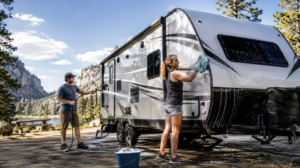
A great road trip is about freedom, scenery, good food, quiet mornings, long highways, and the kind of memories that make people start planning the next trip before the current one is even over. But there is one part of travel that many RV owners, camper owners, horse trailer owners, and enclosed trailer owners do not think about until it becomes impossible to ignore: the outside of the trailer.
After a few hundred miles, a trailer can collect road grime, bug splatter, black streaks, dust, rain residue, tree sap, salt, mud, and campground debris. After a few trips, that clean, polished trailer can start looking dull, neglected, and much older than it really is. That is why smart travelers are starting to treat trailer cleaning as part of trip planning, not just something to deal with after the vacation is over. 🚐
This travel trailer wash guide explains why keeping a trailer clean matters, how it protects the look and value of your investment, and why many road trip lovers wish they had learned this cleaning secret sooner.
Why Trailer Cleaning Matters Before, During, and After Travel
Travel exposes a trailer to more than just pretty views. Every mile adds another layer of buildup. Highways throw dust, oil residue, tar, brake dust, and bug splatter onto the surface. Campgrounds add mud, leaves, pollen, bird droppings, and tree sap. Coastal destinations may add salt air, while mountain routes can add grit, snowmelt, and road treatment residue.
For people who follow travel trends, road trips remain one of the most flexible ways to explore because they allow travelers to move between destinations with their own schedule, gear, and comfort. But that flexibility comes with responsibility. A trailer is not just transportation. It is part of the travel experience, and it needs regular care to keep performing and looking its best.
A dirty trailer can make even a well-planned trip feel less polished. When travelers pull into an RV park, campground, event venue, horse show, job site, or vacation destination, the trailer often creates the first impression. A clean trailer signals preparation, care, and pride. A stained, streaked, or dull trailer can make the entire setup look older and less maintained.
The Road Trip Cleaning Secret RV Owners Wish They Knew Sooner
The secret is simple: trailer cleaning works best when it is routine, not reactive. Many owners wait until the trailer looks terrible before they do anything. By then, grime has had more time to bond to the surface, black streaks have become harder to remove, and oxidation may already be affecting the finish.
A better approach is to clean the trailer before major trips, give it a quick rinse or spot clean during long routes, and wash it again after returning home. This does not mean spending hours scrubbing after every short drive. It means being intentional. A little maintenance at the right time can prevent a lot of frustration later.
Using a dedicated product like Trailer Wash can help owners clean more effectively because trailer surfaces face different types of buildup than ordinary vehicles. Trailers often sit outside for long periods, travel through changing weather, and collect vertical streaking from rain runoff. A cleaner trailer is not just about shine. It is about protecting the surface from long-term wear.
How Road Grime Affects the Look and Value of Your Trailer
A trailer is a major investment. Whether someone owns a travel trailer, utility trailer, enclosed cargo trailer, boat trailer, horse trailer, or camper, the exterior condition matters. Buyers notice the outside first. A clean and well-kept trailer usually feels more trustworthy than one that looks stained and neglected.
Road grime can cause several problems over time. Bug residue can be acidic. Bird droppings can damage finishes if left in place. Tree sap can harden and become difficult to remove. Salt can contribute to corrosion on metal components. Mud can hide problem areas. Black streaks can make a trailer appear older than it really is.
For RV and travel trailer owners, cleanliness is also tied to pride of ownership. People spend time choosing routes, researching campgrounds, checking gear, and following updates from trusted outlets like Skift to keep up with travel industry trends. Trailer care deserves the same level of attention because the trailer is what carries the experience from one stop to the next.
When the exterior looks clean, the whole trip feels better. Photos look better. Campground setups look better. Fuel stops feel less embarrassing. Even a quick overnight stay feels more enjoyable when the trailer does not look like it has been dragged through six states without a rinse.
Best Times to Wash a Trailer During Travel Season
The best trailer cleaning schedule depends on how often it is used, where it is stored, and what kind of conditions it faces. However, most owners can benefit from a few basic timing rules.
Before a long road trip, washing the trailer gives owners a chance to inspect the exterior. This is a good time to look for cracks, loose seals, worn decals, damaged lights, rust spots, or problem areas that might be harder to see when the trailer is dirty. Starting a trip with a clean trailer also makes new grime easier to notice and remove.
During a long trip, a light rinse or spot clean can help prevent buildup from becoming stubborn. This is especially helpful after driving through bug-heavy areas, muddy roads, coastal regions, or winter-treated highways. Even if a full wash is not possible, removing the worst residue can make a difference.
After the trip, washing the trailer helps remove everything collected along the way. This is especially important before storing the trailer. Putting away a dirty trailer allows grime, sap, salt, and streaks to sit on the surface for weeks or months. That can make the next cleaning session harder and may shorten the life of the finish.
What Travelers Should Keep in Their Trailer Cleaning Kit
A simple cleaning kit can save a lot of trouble on the road. Travelers do not need to pack an entire garage, but having the right basics makes it easier to handle messes before they become bigger problems.
A good trailer cleaning kit may include a trailer-safe wash product, soft wash mitts, microfiber towels, a soft-bristle brush with an extension handle, a hose attachment when available, a bucket, a bug-removal sponge, and gloves. Owners should avoid harsh household cleaners that may damage paint, decals, gelcoat, aluminum, rubber seals, or protective finishes.
A small step ladder may also help when cleaning higher areas, but safety matters. Trailers can be tall, slick, and awkward to reach. Cleaning should be done on level ground, away from traffic, and with stable footing.
Travelers who read Travel Weekly already know that travel planning often includes lodging, transportation, routes, costs, and destination updates. Trailer owners should add cleaning supplies to that same planning list. A well-packed cleaning kit helps travelers stay ready for sudden messes, whether they are parked under messy trees or driving through a bug-filled stretch of highway.
The Connection Between Clean Trailers and Better Travel Photos
Travel is visual. People take pictures of campsites, scenic overlooks, lakefront mornings, desert sunsets, family cookouts, tailgate setups, and national park stops. A dirty trailer in the background can take away from the moment.
A clean trailer makes travel photos look more professional and more enjoyable. This matters for families preserving memories, businesses using trailers for work, influencers sharing road trips, and RV owners documenting their adventures. Even if the trailer is not the main subject, it often appears in the frame.
Cleanliness can also affect how people feel about their setup. When the trailer looks good, the campsite feels more organized. The trip feels more intentional. The entire travel experience feels more comfortable. A clean exterior may seem like a small detail, but small details can shape the way people remember a trip.
For travelers who follow road trip inspiration from sources like AFAR, a beautiful route is only part of the story. The vehicle and trailer become part of the journey. Keeping them clean helps the whole adventure look and feel better.
Why Trailer Washing Is Also About Safety and Inspection
A clean trailer does more than look nice. It also makes inspection easier. Dirt and grime can hide damage. A clean surface allows owners to notice cracks, rust, loose trim, damaged lights, tire issues, hitch problems, and seal concerns before they become serious.
Lights are especially important. Dirty brake lights, marker lights, and reflectors can reduce visibility. A quick wash helps keep lighting clear so other drivers can better see the trailer on the road. Mirrors, windows, license plates, and reflective surfaces should also be kept clean.
For long-distance travelers, a trailer inspection should be part of every major trip. Cleaning gives owners a natural opportunity to walk around the trailer and check for anything unusual. This is a practical habit that can prevent delays, repair costs, and stressful roadside surprises.
The U.S. Travel Association often highlights how travel connects to broader economic activity, planning, and mobility. For individual trailer owners, safe and well-maintained equipment helps make that mobility smoother. A clean trailer supports safer travel by making important components easier to see and maintain.
Common Trailer Washing Mistakes to Avoid
One common mistake is using cleaners that are too harsh. Strong chemicals can damage finishes, strip protective coatings, fade decals, or harm rubber seals. Trailer owners should use products designed for the surfaces they are cleaning.
Another mistake is washing in direct hot sun. Heat can cause soap or cleaner to dry too quickly, leaving streaks or spots. Washing in the shade or during cooler parts of the day usually produces better results.
A third mistake is ignoring the roof. Many trailer streaks begin at the top. Dirt, pollen, leaves, and debris collect on the roof, then rain carries that mess down the sides. Cleaning the roof when safe and appropriate can reduce black streaks and keep the whole trailer looking better.
Some owners also use abrasive brushes or rough pads that scratch the surface. Soft tools are usually better. The goal is to lift grime without damaging the finish.
Finally, many people forget to rinse thoroughly. Leftover cleaner can create residue, streaking, or dullness. A proper rinse helps reveal the clean finish and prevents product buildup.
How Clean Trailers Help Businesses That Travel
Trailer washing is not only for vacationers. Many businesses rely on trailers for mobile services, deliveries, construction, landscaping, racing, food service, events, agriculture, and equipment transport. When a business trailer looks dirty, customers may assume the company is careless, even if the work itself is excellent.
A clean trailer can function like a moving billboard. If the trailer has branding, a logo, phone number, website, or service information, keeping the exterior clean makes that branding easier to read. A stained or dull trailer can weaken the message. A clean trailer helps the business look organized and professional.
This is especially important for companies that travel to customer homes, public events, trade shows, tourist areas, and commercial locations. A trailer may be seen by hundreds or thousands of people during a single route. Keeping it clean is a simple way to protect brand image.
Travel-related businesses, mobile vendors, outdoor recreation companies, and event service providers can all benefit from cleaner trailers. As National Geographic Travel continues to showcase the beauty of destinations and outdoor experiences, businesses that operate in travel spaces should remember that presentation matters. The way equipment looks can influence how people judge the service behind it.
A Simple Trailer Cleaning Routine for Road Trip Owners
A practical cleaning routine does not have to be complicated. Start with a full rinse to remove loose dirt. Apply a trailer-safe cleaning product according to directions. Work from the top down so grime flows downward instead of over already-cleaned areas. Use soft tools to loosen buildup. Pay attention to corners, seams, lights, wheels, and lower panels where grime collects. Rinse thoroughly and dry with microfiber towels when possible.
For stubborn areas, allow the cleaner to dwell for the recommended time, but do not let it dry completely on the surface. Repeat as needed instead of scrubbing aggressively. Gentle repeated cleaning is usually better than harsh pressure or abrasive tools.
After washing, inspect the trailer. Look at seals, decals, lights, tires, hitch components, roof edges, doors, windows, and storage compartments. This turns a basic wash into a useful maintenance habit.
For owners who travel often, this routine can become part of the rhythm of the season. Wash before the first big trip. Spot clean during longer routes. Wash again before storage. Keep supplies ready. Notice problems early. Enjoy the road with a trailer that looks cared for.
Conclusion: A Cleaner Trailer Makes Every Trip Feel Better
A road trip should feel exciting, not messy. A trailer gives travelers freedom, storage, comfort, and flexibility, but it also needs care. Dirt, bugs, streaks, sap, salt, and road grime are part of travel, but they do not have to define the look of the trailer.
The road trip cleaning secret many RV owners wish they knew sooner is that trailer washing should be part of regular travel preparation. It protects the exterior, improves photos, supports safety checks, helps preserve value, and makes the entire setup look more enjoyable.
Whether someone is heading to the mountains, the beach, a national park, a campground, a work site, a horse show, or a weekend getaway, a clean trailer makes the journey feel more complete. Travel is about the memories made along the way, and a well-kept trailer helps carry those memories with pride. ✨