

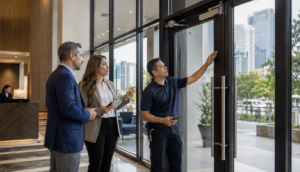
Hotel owners spend a lot of time thinking about guest experience. They focus on clean rooms, comfortable beds, friendly front desk service, fast check-in, updated lobbies, convenient parking, and strong online reviews. All of those things matter. But one major part of the hotel experience often gets overlooked until there is a problem: the doors.
In a busy hospitality market like Houston, doors are more than simple entry points. They help protect guests, guide movement through the property, support fire safety, create first impressions, secure restricted areas, and help staff manage daily operations. From the front entrance to guest room corridors, service areas, stairwells, kitchens, storage rooms, conference spaces, pool access points, and back-of-house areas, commercial doors quietly support the safety and function of the entire property.
That is why hotel owners, general managers, facility directors, and property management teams should pay closer attention to door systems before a small issue becomes a major concern. Houston’s hotel industry continues to grow and shift with major hospitality activity, downtown development, sports tourism, conventions, and international events. As more guests come through the city, hotel safety, access control, and property readiness become even more important.
For hotels reviewing upgrades, repairs, or replacements, Commercial Doors Houston should be viewed as a property investment, not just a maintenance task.
Houston’s Hotel Market Is Getting More Competitive 🏨
Houston is not a small hospitality market. It is one of the largest and most active cities in the United States, with major business travel, medical travel, energy industry activity, sports tourism, conventions, cultural events, and international visitors moving through the area year-round. According to Wikipedia’s overview of Houston, the city is the largest in Texas and one of the largest in the country, which naturally creates steady demand for hotels, extended-stay properties, conference lodging, and hospitality services.
Recent Houston hotel news shows why property readiness matters. Houston First reported that March was a strong month for Houston hotels, with occupancy reaching 70% for the overall market and revenue growing compared with the previous year. When occupancy rises, every part of a hotel works harder. More guests mean more luggage carts rolling through entrances, more staff movement behind the scenes, more deliveries, more room turns, more maintenance requests, and more use of access points throughout the building.
That type of traffic puts pressure on door systems. A loose closer, dragging door, worn hinge, damaged frame, weak lock, or poorly sealed exterior entrance may seem minor during a slow week. During high occupancy, it can quickly become a guest complaint, security concern, operational slowdown, or safety issue.
Hotels cannot afford to treat doors as an afterthought. In a competitive Houston market, small details can shape the way guests feel about the property.
First Impressions Start Before the Front Desk 🔐
A guest begins judging a hotel before they ever speak to the front desk. The parking lot, exterior lighting, signage, walkways, entrance doors, and lobby access all create an immediate feeling. If the entrance door sticks, slams, drags, looks damaged, or feels unsecured, it can quietly affect trust.
Hotels are built on confidence. Guests want to feel like they made a smart choice. They want to feel safe walking in at night. They want the entry to feel clean, secure, and well-maintained. Commercial doors help create that first impression because they are one of the first physical parts of the property a guest touches.
This matters even more as Houston continues preparing for large-scale visitor activity. Houston First has highlighted major hospitality projects and events coming to Houston in 2026, including hotel expansions, tourism activity, and events expected to bring more attention to the city. When visitors arrive for major events, many will compare hotel experiences quickly. Properties that feel updated, safe, and easy to navigate have an advantage.
A strong commercial door system supports that impression. The entrance should open smoothly, close properly, meet accessibility expectations, and handle repeated use without becoming noisy, loose, or unreliable. Doors should feel sturdy without feeling heavy or difficult. Hardware should look clean and function correctly. Glass, frames, thresholds, and locks should all support the professional image the hotel wants to present.
Commercial Doors Support Guest Safety in Ways Owners May Not Notice
Hotel safety is not limited to cameras, lighting, and staff training. Doors play a major role in separating public spaces from private areas, guiding emergency exits, slowing unauthorized access, and protecting sensitive parts of the property.
A hotel may have dozens or even hundreds of commercial doors, each with a purpose. Stairwell doors help support safe movement during emergencies. Fire-rated doors help separate areas of the building. Exterior doors help secure the perimeter. Storage room doors help protect supplies, equipment, and inventory. Kitchen and service doors help separate staff operations from guest spaces. Mechanical room doors help restrict access to systems that guests should never enter.
When these doors are neglected, safety can suffer. A door that does not latch properly may allow unauthorized entry. A closer that fails may leave a door propped open or slamming shut. A damaged frame can weaken security. A panic device that does not function correctly can create a serious issue during an emergency. A worn lock can make staff feel less confident about restricted areas.
For hotel owners, this is where prevention matters. Waiting until something breaks often costs more than addressing wear early. Regular inspections, timely repairs, and proper replacement planning can help reduce liability concerns, protect guests, and keep operations moving.
Houston Hotels Are Preparing for More International Attention 🌎
Houston’s hospitality industry is receiving more attention as the city prepares for major events, including World Cup-related travel. Houston First shared guidance on ways hotels can welcome World Cup guests, emphasizing how important the guest experience will be as travelers arrive from different cities and countries.
This kind of international attention raises expectations. Guests may be arriving after long flights, late-night travel, crowded events, busy transportation, and unfamiliar surroundings. A safe, smooth hotel arrival can make a big difference. Secure entrances, clear exits, well-functioning room corridors, and dependable access points all help create a better stay.
Visit Houston has also provided a Houston Hotel Playbook to help hotels maximize visibility and prepare for major visitor activity. While marketing and guest experiences are important, physical property readiness should be part of that conversation too. A hotel can promote amenities, location, and service, but if the property feels worn, unsecured, or difficult to navigate, guests will notice.
Doors are part of that readiness. They affect guest movement, staff efficiency, safety, accessibility, and the overall feel of the building. A property that upgrades its doors before peak demand is better positioned than one that waits for problems to happen during a rush.
Back-of-House Doors Matter Just as Much as Guest-Facing Doors
Many hotel owners think first about the lobby entrance, but back-of-house doors are just as important. Staff areas carry a lot of daily movement. Housekeeping teams move carts in and out of storage rooms. Maintenance staff access mechanical spaces. Kitchen staff move through service doors. Vendors make deliveries. Laundry areas, employee entrances, supply rooms, and loading zones all depend on durable commercial doors.
If these doors do not function properly, hotel operations slow down. Staff may prop doors open because they are hard to use. Locks may be bypassed because they are inconvenient. Hinges may loosen from constant impact. Frames may get dented by carts and equipment. Doors may fail to close fully after repeated use.
These issues do not just affect staff convenience. They can affect security, cleanliness, energy efficiency, and safety. A poorly secured service door can create risk. A damaged kitchen or storage door can affect workflow. A door that stays open can allow pests, weather, or unauthorized access into areas that should remain controlled.
Hotels run on systems. When the behind-the-scenes systems work well, guests feel the difference even if they never see what is happening. Strong commercial doors help staff do their jobs with less friction and fewer interruptions.
Renovations Should Include Door and Hardware Planning
Hotel renovations often focus on visible upgrades such as flooring, lighting, paint, furniture, room finishes, bathrooms, and lobby design. Those improvements are valuable, but door systems should be included in the planning stage.
Houston hotel development and renovation activity continues to make news. Houston First reported that a new dual-brand hotel opened in Downtown Houston, adding more rooms near Daikin Park and increasing hospitality capacity in the city. As new and renovated properties enter the market, older hotels may need to look carefully at the details that influence safety, appearance, and function.
A renovation that leaves old, damaged, or outdated doors in place can feel incomplete. Fresh paint and new flooring may improve the look, but worn doors, scratched frames, poor seals, and outdated hardware can pull down the overall impression. Even worse, old doors may not support the property’s current needs for security, access control, or traffic flow.
Door planning should include entrances, guest corridors, stairwells, meeting rooms, restrooms, employee areas, storage areas, pool access, fitness centers, kitchens, laundry rooms, and exterior service points. Hardware choices matter too. Closers, hinges, panic bars, locks, handles, thresholds, seals, and frames should match the way each space is used.
Commercial Doors Can Help Protect Reviews and Reputation ⭐
Online reviews can shape hotel revenue. Guests often mention cleanliness, safety, noise, maintenance, and whether the property feels updated. Doors can influence several of those categories.
A slamming door can create noise complaints. A room entry door that feels loose can make a guest feel unsafe. A hallway door that squeaks or drags can make the property feel neglected. An exterior door that does not close properly can raise concerns about security. A restroom door with broken hardware can frustrate guests attending meetings or events. A conference room door that sticks can make a business gathering feel less polished.
Most guests may not write, “The commercial doors need maintenance.” Instead, they may say the hotel felt old, loud, unsafe, poorly maintained, or not worth the price. That is why hotel owners need to think beyond the door itself and consider the guest perception attached to it.
In a city like Houston, where hotels serve business travelers, families, sports fans, convention guests, medical visitors, and international travelers, reputation matters. Every small physical detail either builds trust or chips away at it.
Security Is Not Just About the Front Entrance
Hotel security is layered. The front entrance matters, but so do side doors, stairwells, pool gates, meeting room doors, parking garage access points, employee entrances, storage areas, electrical rooms, and maintenance spaces. A single weak point can create a problem.
Commercial doors help define who belongs where. Guests should have easy access to approved areas. Staff should be able to move efficiently through work areas. Restricted rooms should remain secure. Emergency exits should function correctly. Public and private spaces should be clearly separated.
When doors are outdated or poorly maintained, those boundaries become weaker. This can lead to unauthorized access, theft, guest safety concerns, staff frustration, and liability exposure. Hotel owners should not wait for an incident before reviewing door security.
Access control may also be part of the conversation. Some hotel areas need keyed locks, card access, panic hardware, automatic closers, reinforced frames, or fire-rated assemblies. The right solution depends on the door’s location and purpose. A front entrance, stairwell, linen room, conference space, and loading dock should not all be treated the same.
Door Maintenance Is a Smart Long-Term Investment
Commercial doors are used constantly. In hotels, they may be opened and closed hundreds or thousands of times each week. Over time, hardware loosens, seals wear down, hinges shift, closers lose tension, frames take impact, and locks begin to fail.
Routine maintenance helps catch issues early. A small adjustment today can prevent a larger repair later. Replacing worn hardware before it fails can reduce emergency service calls. Fixing a door that does not latch can improve security immediately. Updating older doors can help the property look better and operate more smoothly.
This is especially important when Houston hotels are experiencing stronger demand periods and preparing for more visitor activity. When occupancy is high, maintenance problems are more disruptive. A door issue during a slow period may be inconvenient. The same issue during a sold-out weekend can become a major operational headache.
Hotel owners who plan ahead are better positioned to protect their properties, staff, guests, and reputation.
Conclusion
Commercial doors may not be the flashiest hotel upgrade, but they are one of the most important. They support safety, security, guest confidence, staff workflow, emergency readiness, first impressions, and long-term property value. In a growing Houston hospitality market, those details matter more than many owners realize.
Hotels are judged by how they feel the moment a guest arrives. A clean lobby matters. Friendly service matters. Comfortable rooms matter. But the doors guests walk through, the doors staff rely on, and the doors that protect restricted areas all help shape the experience.
For Houston hotel owners, commercial doors should not be treated as an afterthought. They should be part of the property’s safety plan, renovation strategy, guest experience, and long-term investment approach. A stronger door system can help a hotel feel safer, operate better, and stand out in a market where trust is everything.